
Throughout my lifetime, my mom has been sharing stories and bits and pieces of memories from her childhood in Los Angeles with me. From her youthful, innocent perspective, east LA was a vibrant and safe place for her to grow up. She mentioned eating tacos on Olvera Street and that caught my attention because I had just read about Olvera Street in “American Tacos: A History and Guide” by José R. Ralat. Olvera Street is a pretty significant place in the history of Mexican food in LA and the United States; a bit of a controversial history, but an interesting history nonetheless.
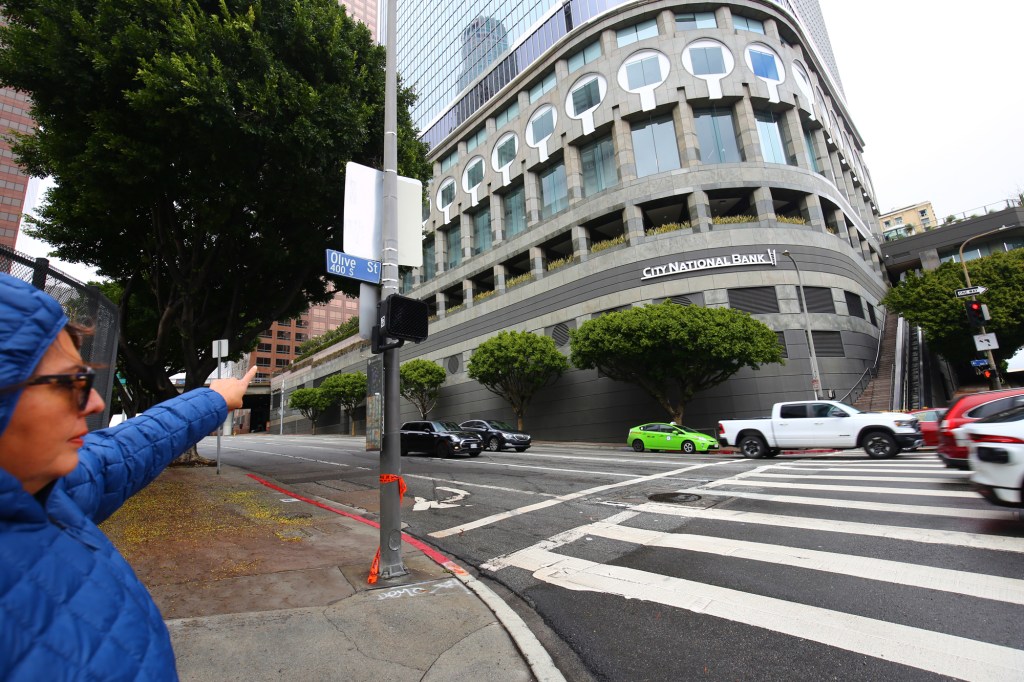
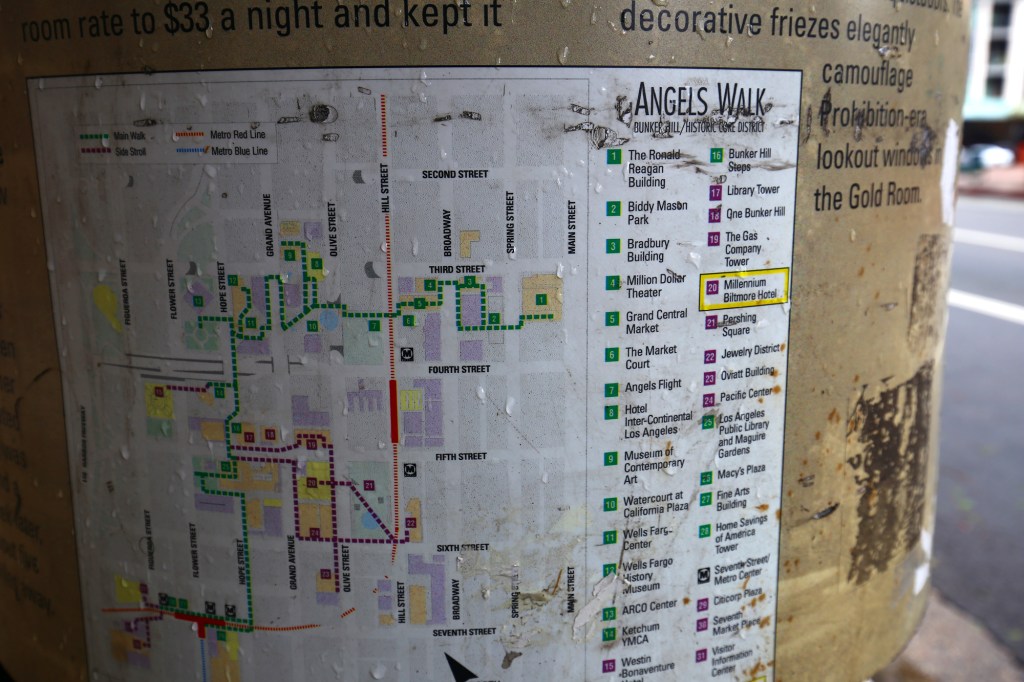
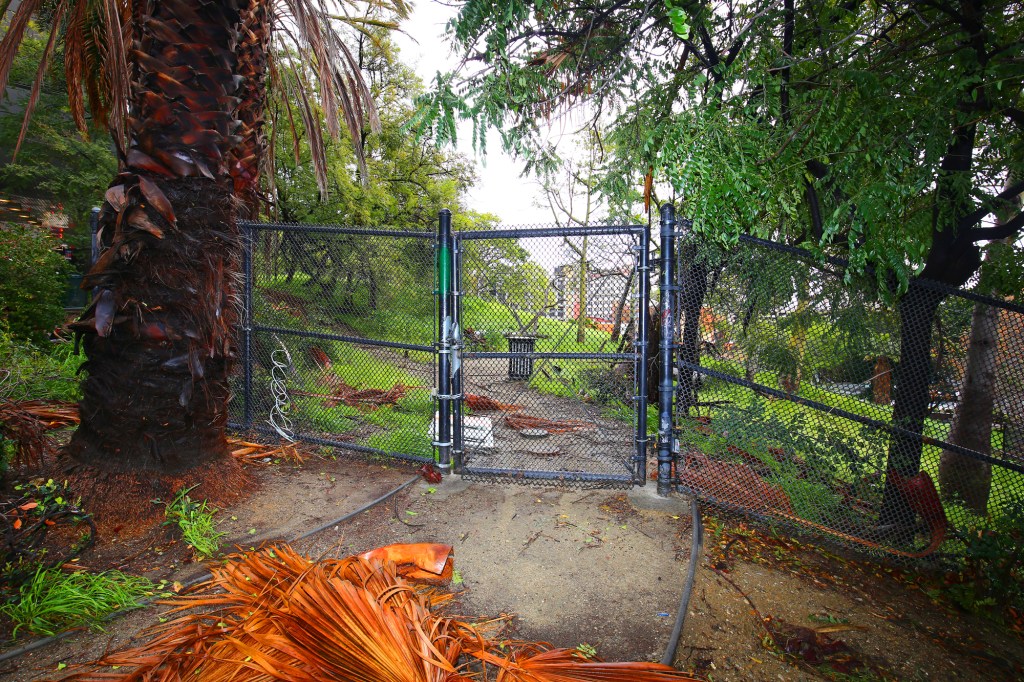
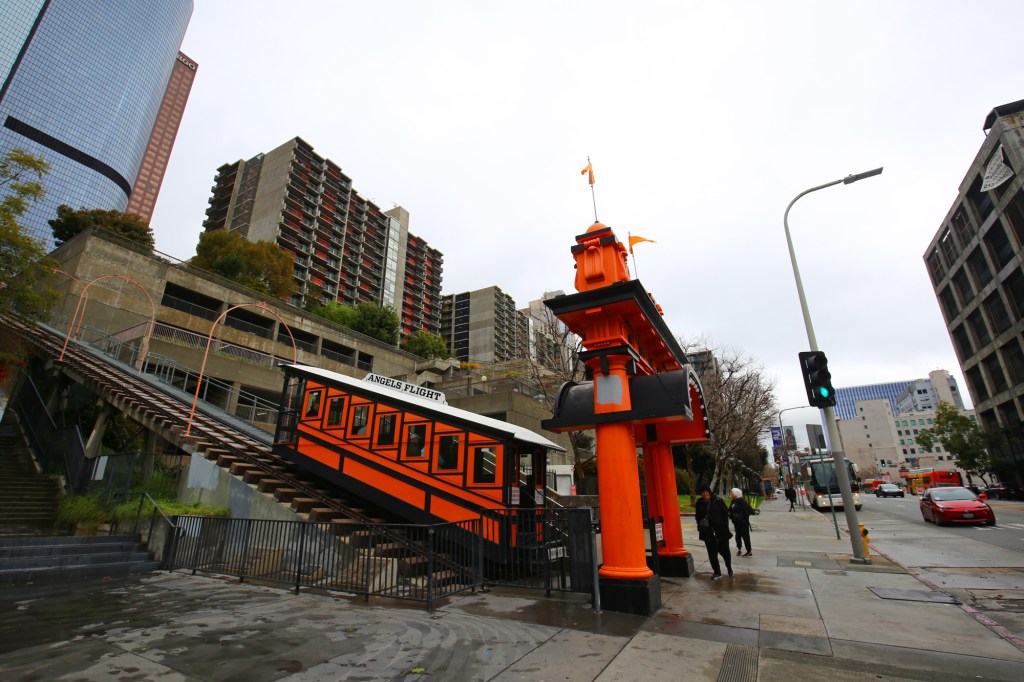
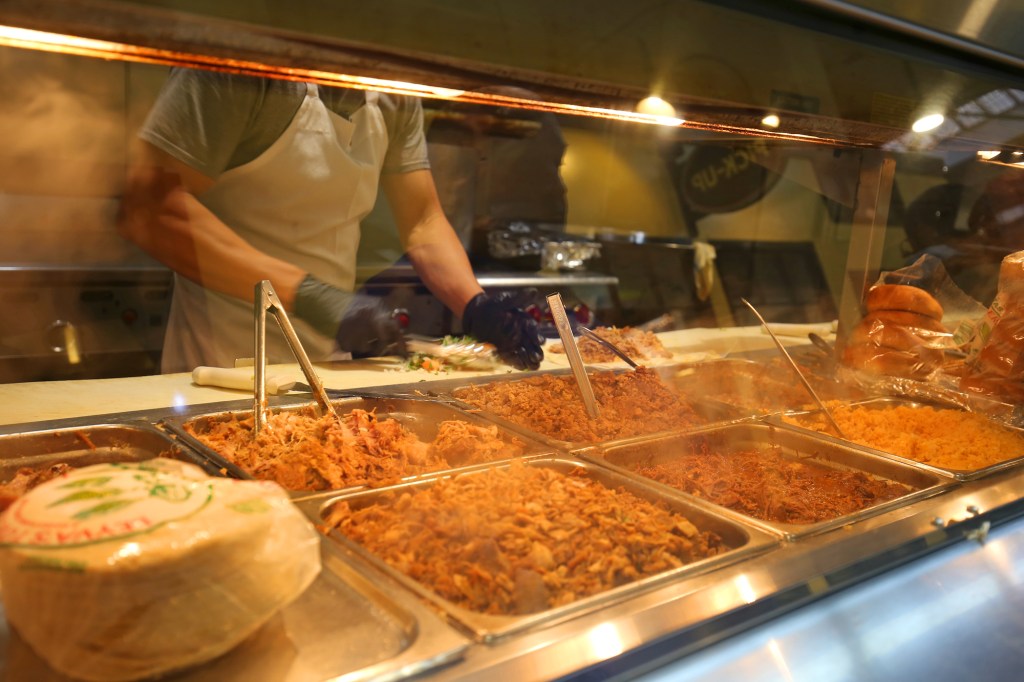
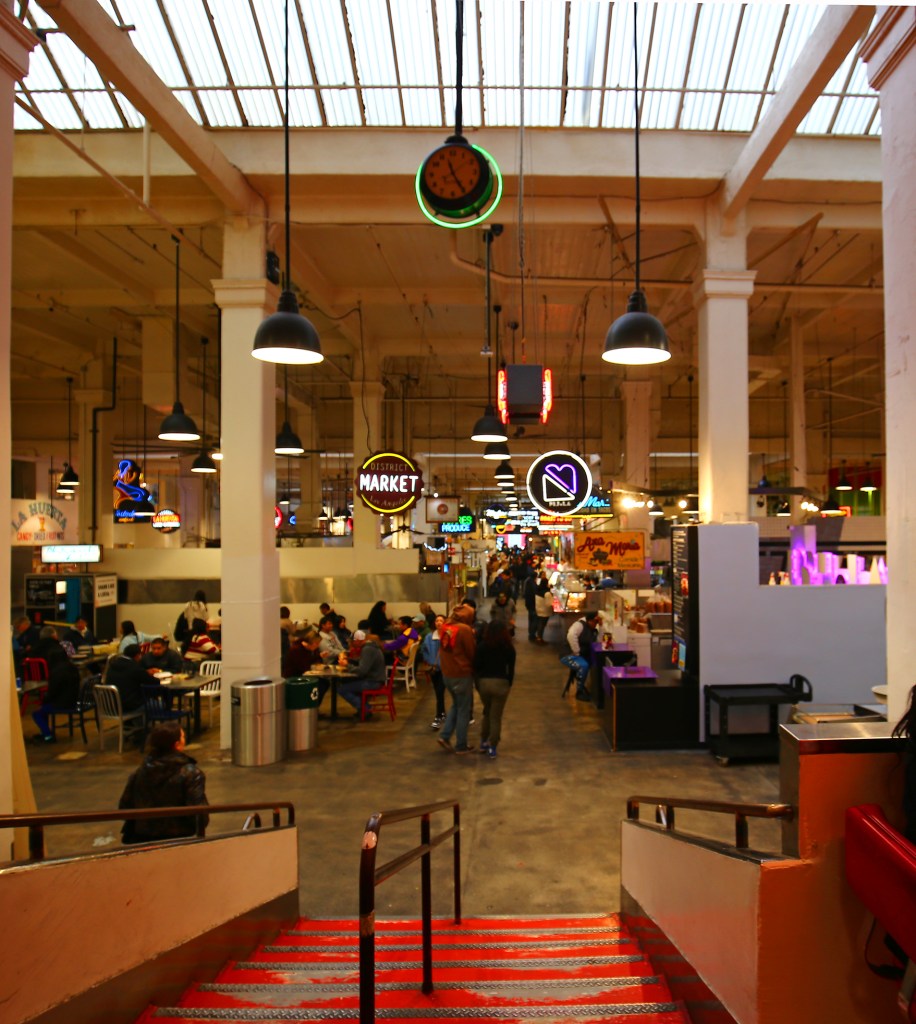
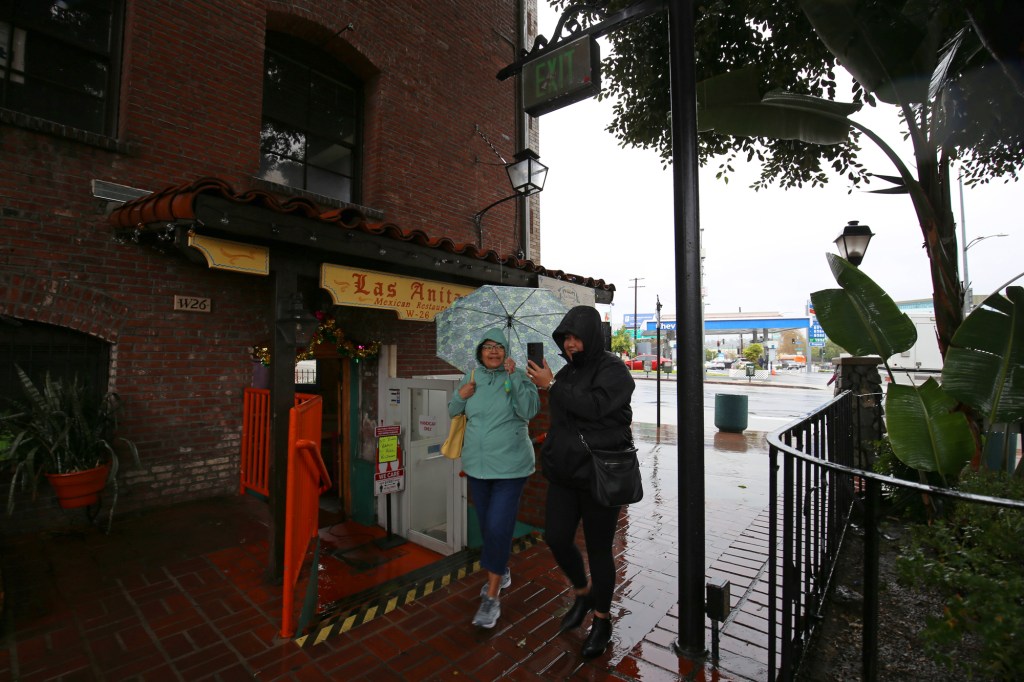
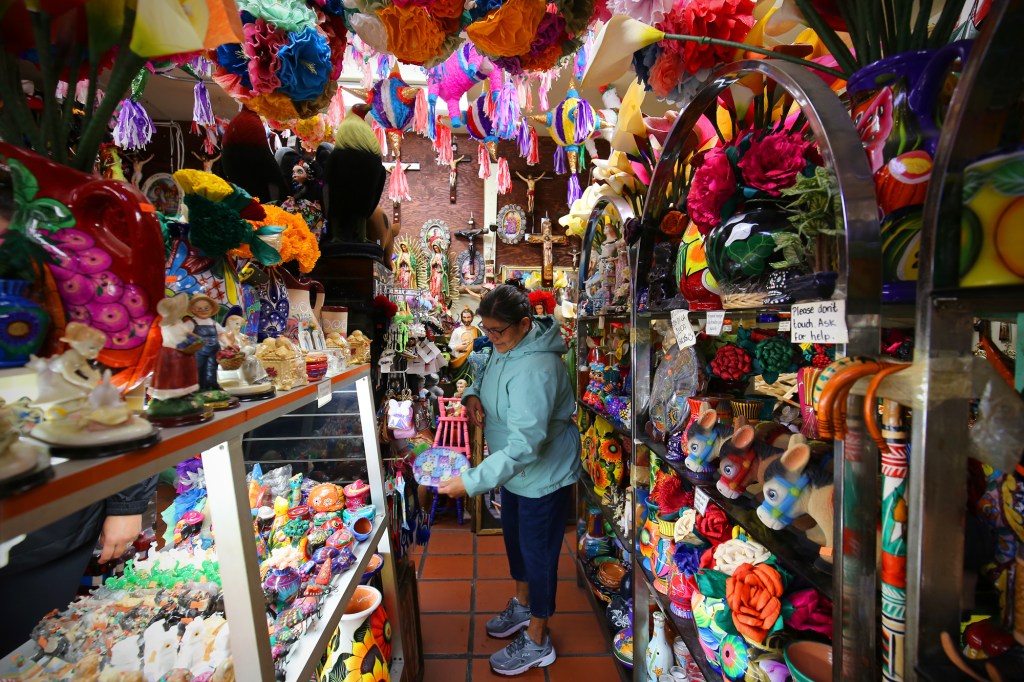
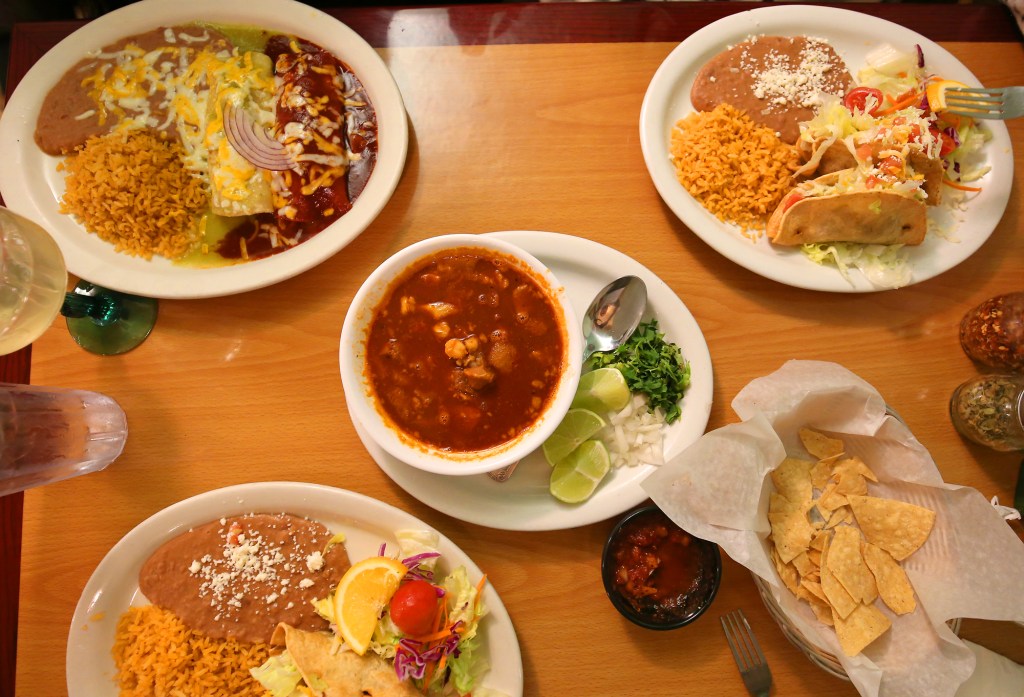
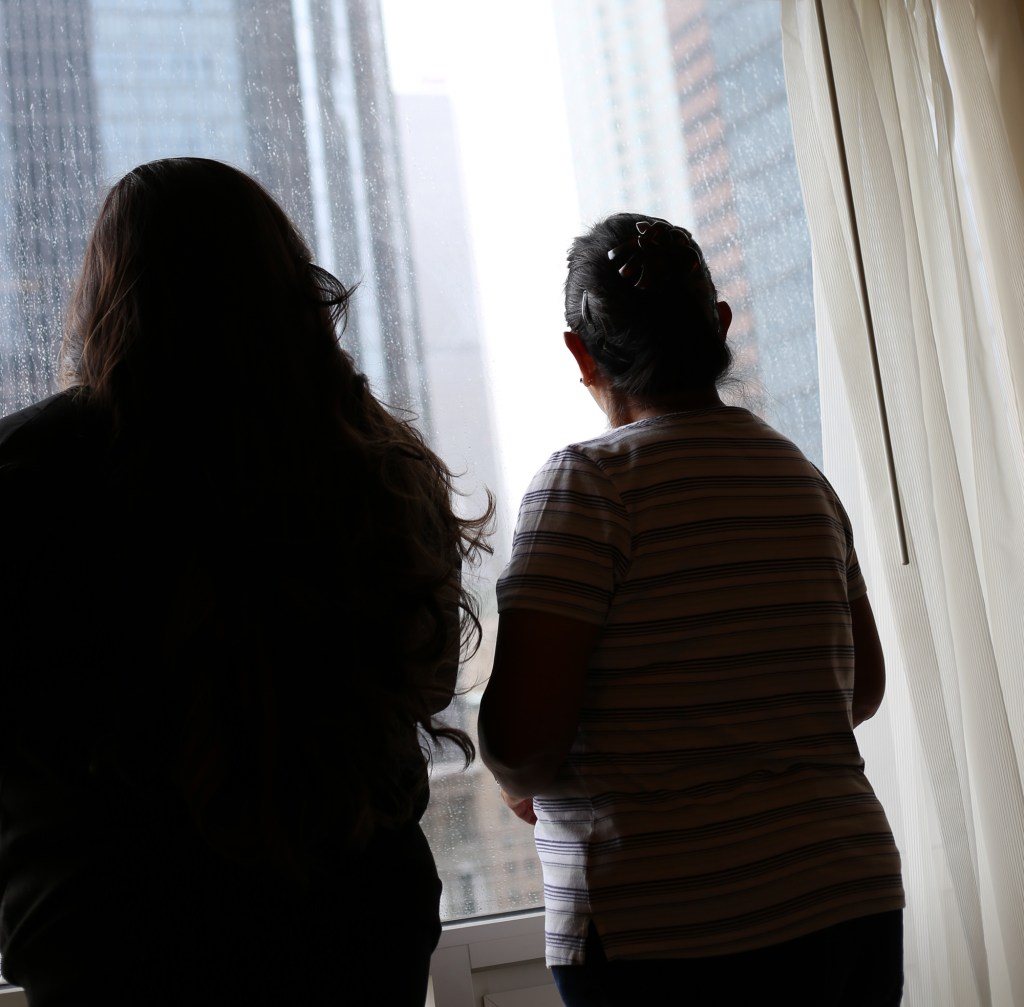

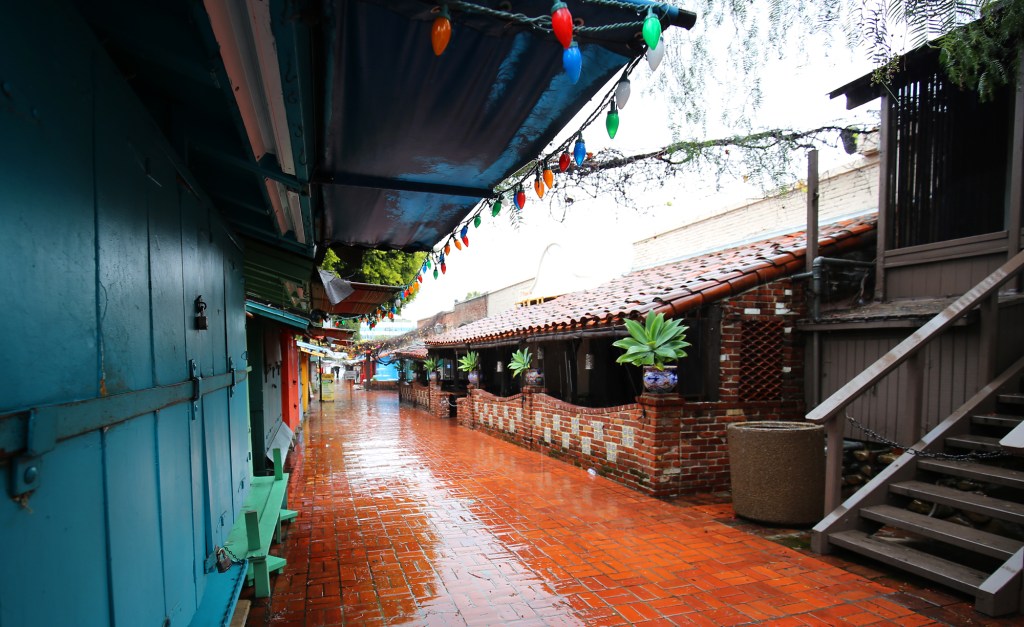
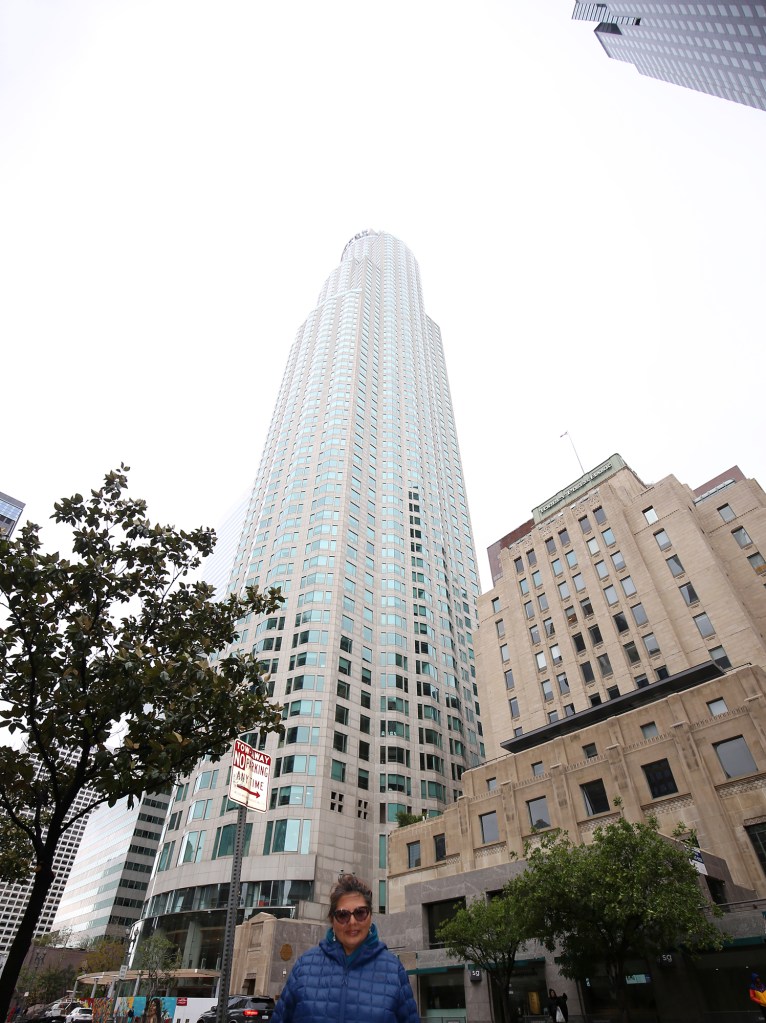
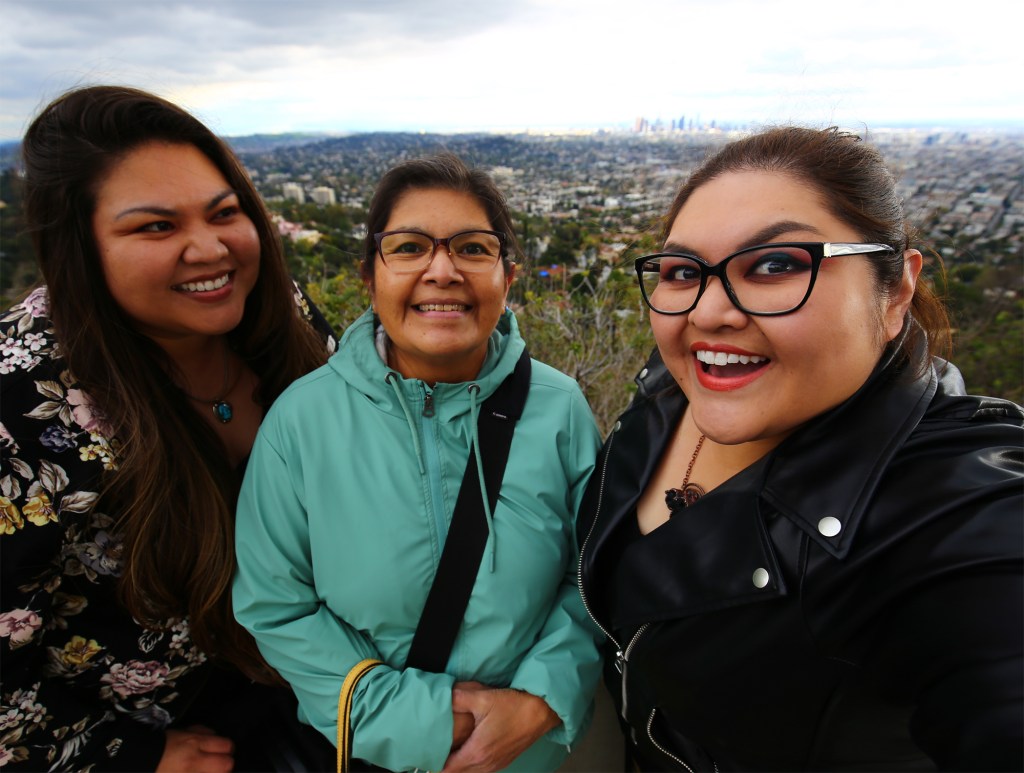
My mom’s memory of Olvera Street helped me form an itinerary for an adventure: to go back to Olvera Street to have those same tacos and to learn about Mexican and Indigenous food there, and back to downtown Los Angeles to learn more about the generations of Native people who moved to the city—by way of the Urban Relocation program—and created an urban Native community with its own vibe and culture.
Full transcript below.
Heard:
Kathy Murphy, my mom
Dr. Alisha Murphy, my little sister
Dr. Enrique Ochoa, professor of history and Latin American Studies at California State University Los Angeles
Dr. Sarah Portnoy, producer of “Abuelita’s Kitchen” and professor in the Departments of Latin American and Iberian Studies and American Studies and Ethnicity at the University of Southern California specializing in Latinx food culture and food justice
Pamela Peters, Diné multimedia documentarian. Her film and video project is called the “Legacy of Exiled Ndnz”
Tammy Lewis-Willmond, second generation LA Native and my mom’s half sister’s daughter
Mentioned:
United American Indian Involvement
El Tepeyac Café
Credits:
Production, hosting, engineering by Andi Murphy
Podcast intro and outro music by CW Ayon
Episode music by Blue Dot Sessions
“Cornicob”-Sugartree, “Sienna’s Regression”-Heringbone, “Sharp Lapel”-Transistor Radio, “The Queen of Cones”-Tarana, “Caravan 9”-The Caravan
Transcript: This is the Toasted Sister Podcast. I’m Andi Murphy.
Thank you for continuing to listen to this podcast. If you haven’t already, please subscribe on your favorite podcast listening app, that way you’ll be notified when new episodes drop. You can also keep up with Toasted Sister happenings when you follow on Instagram and Facebook. If you’d like to see photos from this very special episode, you can see them on social media and at Toasted Sister Podcast.com. Now, on with this very special and very long episode.
I was born and raised on the Navajo Nation. Crownpoint, New Mexico is where most of my family are from and they still live there. It’s a little town of about 3,000 people—big by reservation standards—where there’s a couple gas stations, a hospital, two locally owned restaurants, two tribal colleges, a high school, an elementary school and a boarding school. This is where a lot of my dad’s relatives are from. They went to some of these same schools. Some were shipped off to Utah to spend a majority of the school year with white, Mormon foster families during 1950s and 60s; that was during the hay days of Indian Placement Program.
Through the duration of the program—from 1954 to about 1998—more than 50,000 Native American children were handed over to the Church of Jesus Christ of Latter-Day Saints to be raised far from their culture, language and traditional foods. It was one form of mass assimilation that took place in this country.
Another form was the Native American Relocation Program. You’ll hear more about it later in this episode, but it was a government program that enticed waves of Native people to move away from their tribal homelands and into cities, mainly Chicago, Minneapolis, Denver and Los Angeles.
That’s why my mom, Kathy, was born—and partly raised—in Los Angeles, east LA, to be a little more exact.
Throughout our lifetime, mom’s been sharing stories and bits and pieces of memories from her childhood in Los Angeles with us. From her youthful, innocent, perspective, east LA was a vibrant and safe place for her and her twin sister, Colleen, to grow up.
Picture the 1960s in Los Angeles… Then pan over to palm trees and a small house on an unassuming street. The young Wood family lives there. That’s my mom’s little nuclear family; dad, mom, older brother, older sister and the twins.
They didn’t have that much money. My mom’s dad, Kimsey, worked as a laborer for the Donald Douglas aircraft company, and her mom, Alice, worked off and on. My mom recalls beans. Lots of beans for dinner. And bacon grease, never the actual bacon. They’d play outside, mostly barefoot, with friends from the neighborhood until the streetlights came on.
They also took the occasional trip to the beach where my mom’s favorite thing to do with her twin was to stand still in the sand and watch the waves and then look back to see that mom and dad are now sitting in a different spot. … I think it’s an optical illusion but can you imagine these little brown girls just standing there for fun?
They also took the occasional trip to Olvera Street for shopping and tacos, she said.
She mentioned this a few years ago and it caught my attention because I just read about Olvera Street and downtown LA in a taco book. And it’s a pretty significant place in the history of Mexican food in LA and the United States… a bit of a controversial history, but an interesting history nonetheless.
And my mom is my connection to this culinary history and the history of removal. Her memory of Olvera Street helped me form an itinerary for an adventure; to go back to Olvera Street to have those same tacos and to learn about Mexican and Indigenous food there, and back to downtown Los Angeles to learn more about the generations of Native people who moved to the city—by way of the Relocation program—and created an urban Native community with its own vibe and culture.
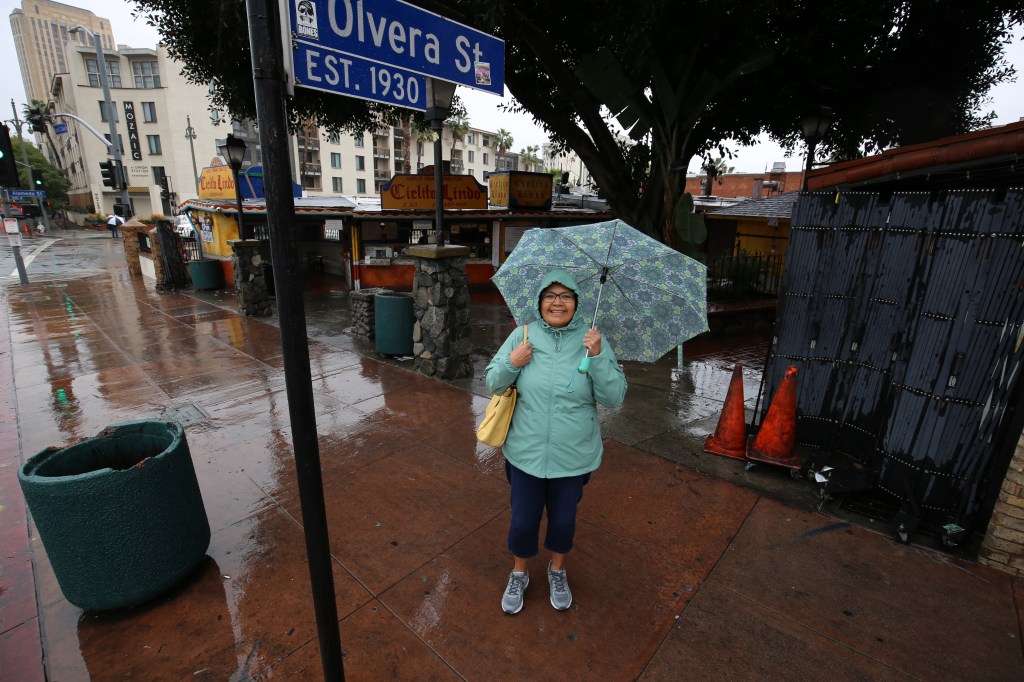
I invite you to tag along on our Los Angeles adventure. One of our first stops was Olvera Street. It had to be the only weekend that an atmospheric river settled overhead so it was cloudy, rainy and cold the entire time…
MOM: I think when we were small, we mostly liked to go to the park or to the beach. I remember going off by ourselves. I remember our parents, they probably said, like, “be careful where you’re going” or, you know, “come back right away” or stuff like that. But I just remember being on the street, walking by ourselves, like to the park or to the store.
ANDI: Yeah. They were just like, “come back before it gets dark.”
MOM: Yeah. Yeah. We would be outside all the time, playing, playing, playing. I don’t remember being in the house much.
ANDI: My sister, Alisha Murphy, is with us. She’s a year younger than I am and goes by Dr. Alisha Murphy. She’s the economist for our tribe now. We both moved away from the reservation to attend college, so we know what culture shock feels like and we know what missing home feels like. But we were students back then and we always had these systems of support around us.
ANDI: I’m just thinking about, like, how young Native people, young Navajos felt when they were, when they came here. You know, it’s so like culture shock times five. Yeah. They weren’t here for college. They were here to just, like, start a new life, you know, almost kind of like dumped off, you know. That was kind of like the government’s plan was to dump everybody off and, “go make your way.” And I think a lot of people, you know, struggled with that. The film, “The Exiles” that I
watched was all about that. A lot of young people started drinking. And, you have the freedom. You have youth, you have that all mixed with just being dumped in this new space. And then you have, like, your cultural ties and your cultural connections just like completely severed at the same time.
ALISHA: And being treated that you’re not a citizen because at that time, you were not considered, you know, a citizen as much as everybody else or as much as other minorities—which we still struggle with today. But even more so when that happened, like, they were dumped (dumped) they were relocated here in Los Angeles, but then weren’t treated as such, you know. That’s so much to handle. And her (MOM) while she was born here so she didn’t know what it was like back at home.
ANDI: The upside to touring Olvera Street during an atmospheric river event is the weather is nice and cold and no one is around. The downside, there was only one restaurant open: Las Anita’s.
ANDI: What do you want mom?
MOM: Well, looking at the menu, my goodness, I remember eating tacos with shredded beef. So that’s what I’m going to look for. And that’s what I want. Because it reminds me of when we were small. That’s, that’s the kind of tacos we had all the time; with shredded beef.
ANDI: Let’s see, there’s enchiladas, plant based, plant-based chicken dishes? They have a really big menu here. They have margaritas.
ANDI: Las Anita’s was founded almost 80 years ago. It’s a small place containing lots of festive furniture and colorful Mexican folk art. And the ceiling is really low. And I felt like we were sitting in a cave of sorts. That’s because the buildings on Olvera Street are very old.
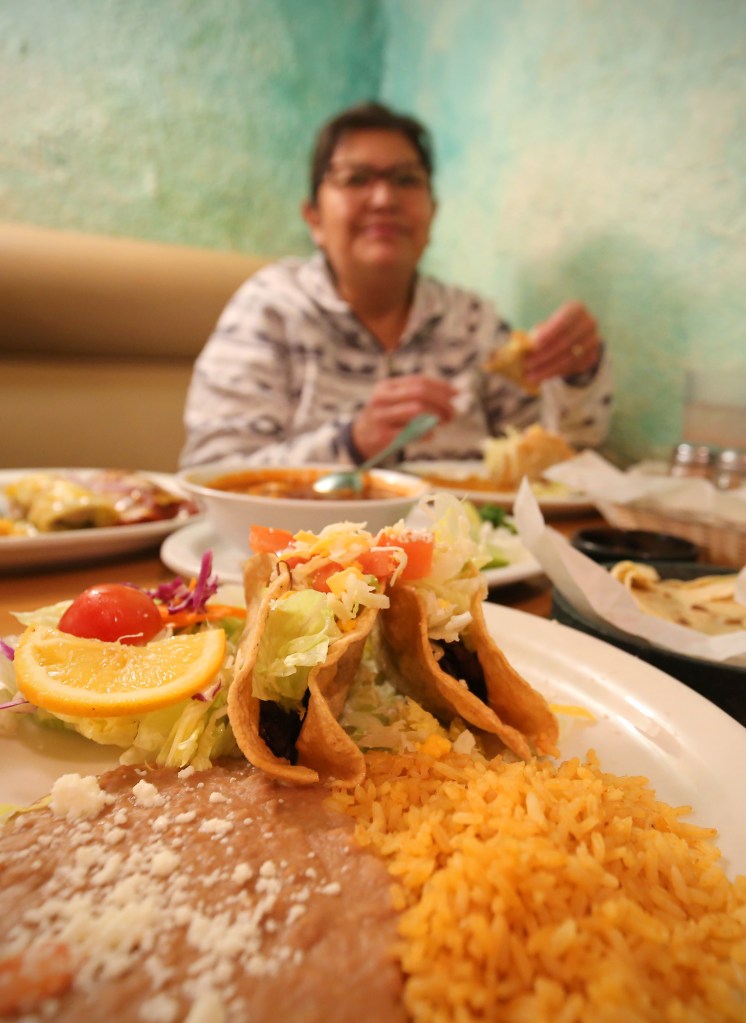
ANDI: We got our tacos. And they are crispy, crispy tacos with the side of looks like a little salad with an orange slice and some beans and rice. What do you think about what they look like?
MOM: They look really good. But what I remember when I was small was just shredded beef and a little bit of cheese. That’s all I remember. I don’t remember lettuce and tomatoes, all this fancy stuff on it. This right here is so colorful and so pretty.
ANDI: All right, let’s dig in. Hey, can I take a picture first? Put that rice back!
ANDI: Olvera Street is the oldest plaza in California. And it’s similar to many other historic Spanish spots around the West like San Diego’s Old Town, Barrio Viejo in Tucson, Old Mesilla in Las Cruces, New Mexico, Old Town in Albuquerque and the Santa Fe Plaza. They all predate the states around them. And in current times, they’re all very popular tourist sites…
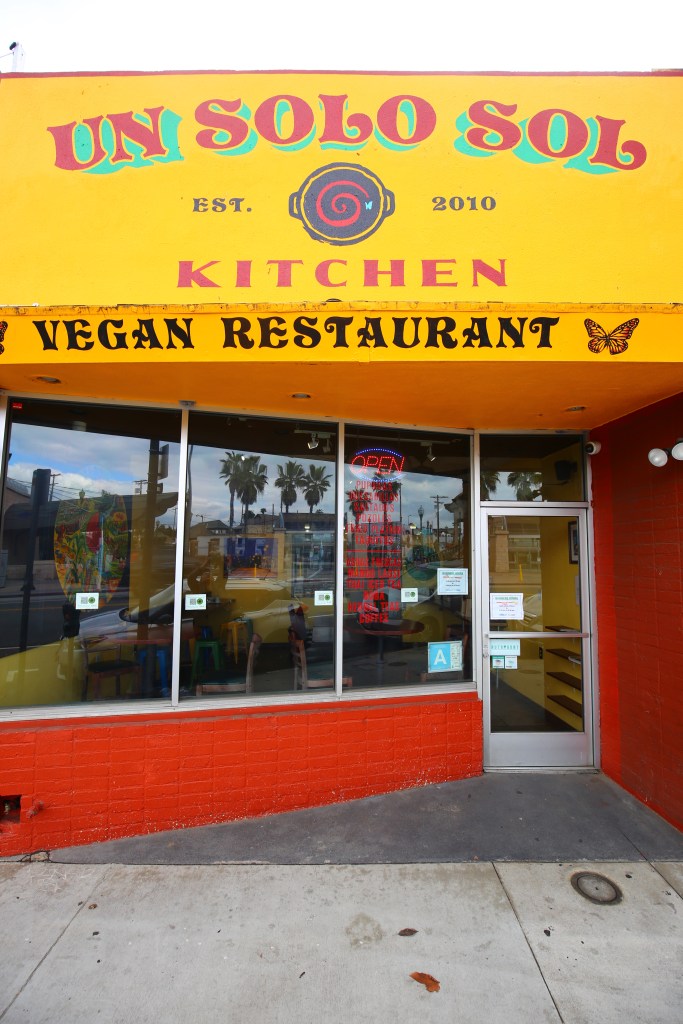
ANDI: Back to Los Angeles. To learn more about the food from Olvera Street and in the city, we have to learn more about Los Angeles and what it was that drew folks to this area, to the homelands of the Tongva and so many other tribes. To do this, I enlisted the help of Dr. Enrique Ochoa, professor of history and Latin American studies at California State University, Los Angeles. We met at a different restaurant. Un Solo Sol is a small vegan Latin American spot in Boyle Heights. And we’re sitting in the middle of the dining area, which is well lit by windows facing the street.
ANDI: Let’s go back into the beginning of Los Angeles. How did it become what we know as Los Angeles? I mean, how did why were people drawn to this area? And then how did it just boom into this, the largest, you know, one of the largest
cities in America?
DR. OCHOA: Yeah, so the region that we’re now calling Los Angeles, right, is an area in which, for thousands of years, communities have lived and thrived. So right now, we’re on Tongva land. But it’s also called sometimes Gabrieleño land or Kizh land. We’re in the area that was colonized by Spain. So, in 1781, people from what is now northern Mexico, coming through the missionaries, came and settled in the area in 1781, established San Gabriel mission nearby, and began to work to colonize, as settler colonialists do, come and take over the land, right? Try to teach the population to submit and to work the land in the way that Europeans saw fit. So, this kind of settler colonialism, really was a shock, right? Uprooted large numbers of people forced them into the missions. We know anywhere that
Europeans went: within the first, you know, 60 to 80 years 80% to 95% of the population was decimated. Nevertheless, people who survived adapted and maintained themselves. And so the Spanish were here throughout 1781. Well until the Mexican independence up until 1846, when the US colonized the area as well, through the war of the North American invasion. And beginning in the 1850s, we begin to see large numbers of whites coming from the Midwest, coming from the east, especially around the gold rush of California 1849, even though that’s,
you know, it’s about 400 miles north of where we are here in Los Angeles, but LA became an important kind of way station for that. And over a rather short period of time, the Mexicano population was here, the Mexicano-Indigenous mixed population that was here had their land taken from them kind of forcibly through the law. And over time were forced to work as wage labors, or be imprisoned throughout the area throughout the early 20th century. Then the city founders of LA wanted to argue that LA was like the East Coast in that it was not Indigenous.
It was European, and so they played on the Spanish fantasy past of California. This notion that the Spanish were also Europeans and that they were “civilized,” quote unquote, and therefore they tried to find a way of attracting visitors on this notion that LA is a Spanish city and capitalized the word S, right? Not Mexican, not Indigenous. There was very clearly anti-Mexican, anti-Indigenous, and definitely anti-Black, and they worked hard to kind of attract folks based on that. I say the part of anti-Black is because in 1781, right, when the first Pavladores came and settled and founded LA, the majority of them were of African descent, where Mulatto, Afro-Mexicans were mixed, and for a long time, the city worked hard, especially in the early 20th century. The city founders worked to erase that. We erased that history as part of the anti-Blackness sensibility and trying to draw, again, Midwestern whites to the area. And so this notion of the Spanish fantasy past was very, very prominent, and it continues throughout this day, right?
Efforts to kind of whitewash the history and to play up on the Spanish part. Throughout the 20s and 1930s and 1940s, we see large waves of Mexican immigrants that begin to come after the Mexican Revolution, but many who are here as well, before bringing relatives and the like. And the city begins to grow, and the Mexican population increasingly moves right to the east of downtown, like where we are now in Boyle Heights. There was fierce segregation, so many parts they couldn’t go, but in this area they did. Many moved as well to South L.A. where large numbers of African Americans were also coming as part of the great migration being attracted here for jobs. So, L.A. by the 1940s and especially after World War II is a booming city.
ANDI: You know, I’ve been hearing about Olvera Street being part of that Spanish fantasy of the past. Is that what you, I guess… do you concur?
DR. OCHOA: Yeah, definitely. Olvera Street was part of the city founder’s notion of how to attract tourists and bring tourists based on this notion of a typical “Spanish village,” quote unquote, as they would say, right, they meant Mexican, but they didn’t want to say Mexican, they meant Spanish. And so, as they settled to the area, they thought, yeah, we will be able to make it in a way that shows our European past, shows a little primitiveness in, right, in their racist concept, and at the same time give folks a taste of it, and they will attract people. And so Olvera Street was definitely founded in that way. They found ways to figure out how to have the early restaurants that were selling Spanish food, and they would advertised as Spanish food, not Mexican food. Olvera Street is also right next to the historic Pueblos, so in the 1930s there were major raids that led to deportation of nearly a million people right throughout California during the Great Depression. And so at the same time that the city officials are trying to extrapolate this Spanish fantasy past, they’re waging an anti-Mexican war. At the core, it’s a major contradiction. On the other hand, it does provide some spaces for some communities to be able to at least have some kind of space in order to continue some of their practices. However, really, they’re on display. I mean, that definitely changes over time, but I think that’s at this root and that fundamental contradiction of saying, “see we’re Spanish, we embrace it, we’re multicultural.” And at the same time, we’re deporting large numbers of people. Shows the brutality of that contradiction.
ANDI: How important is the, you know, the labor force population to the popularity of tacos and Mexican food here in Los Angeles?
DR. OCHOA: What we’re calling Mexican food in general—is the general term, right—is what people have been eating for long periods of times. That develops despite the efforts of city planners, the city fathers who tried to say, “yes, we have Spanish food and not Mexican food.” Historically, in the 1920s, 1930s, there were these strong pressures of Americanization programs where teachers went after the mothers of kids and tried to teach them to cook healthy meals, and that meant not Mexican, not Indigenous foods. And so there was a really strong kind of war against maize; war against maize, where they would argue, no, no, no, you can’t have your kids eating tacos. They need to be eating wheat bread, they need to be eating fruits and vegetables and drinking milk. They worked very hard to link kind of criminality to tortilla consumption. And Indigenous people and Mexicano folks who are eating these foods like maize, which, you know, is an Indigenous invention, right, the cultivation, Teosinte, eight to 10,000 years ago, the role of Indigenous women right in Central Mexico, Central Mesoamerica, to begin to figure out the chemical component for transforming maize into masa, which is a profound scientific innovation, because with the adding cal, with the adding a limestone, that transforms everything, that makes it so that the masa sticks together. It adds the amino acids, which releases the niacin, which helps to create a kind of a more fuller protein. And we know everywhere else throughout the world, where maize has traveled, and among working people where it’s been the basis of diet,
but hasn’t been in that form of nixtamal, right, people get pellagra, and they die, right. And pellagra is a horrible disease. Obviously, it never happened in Central Mexico, right. It never happened in other places throughout the Americas where that innovation of Indigenous women existed. That richness, that base that’s there and that was carried here in the communities, both by the Spaniards and then later on by the Americans, have really sought to erase that and to push that underground, right, and to get folks to eat rather unhealthy foods in so many ways,
and deny the existence of the great diversity of Indigenous cuisines and Indigenous foods that people have eaten, and that later on that working-class Mexicanos have been eating, to kind of push that out. So, there’s that constant kind of war against it. Despite that, communities were flourishing in the 1920s and 1930s and finding in the homes and in kitchens, women were taking their knowledge, that they had learned generations, taking their sassón, their kind of, their touch, which, again, is about tactile knowledge, it’s about sensory knowledge. It’s a much more holistic form of knowledge, and passing that down, and maintaining that in restaurants that was also being shared, in communities that was being shared, so that it remained. Tortillas being produced, still in the houses, still in the 20s, 30s and 40s, increasingly mechanized, but still being able to thrive in such ways. And a lot of that really begins to transform, if you will, kind of in the 1970s and 1980s and afterwards, with the kind of attack of neo-liberalism, which has worked to kind of foster corporations taking over those processes and mass producing it, and de-skilling it, and forcing folks right into the workplace for longer hours, with little opportunity to be able to cook their own meals and maintain the traditions.
ANDI: You mentioned women, Indigenous women, and the science and just knowledge that came with nixtamalization and that whole process. I think they are among, you know, some that are missing in the history of food. Talk to me about who’s missing in this food history, from what we all kind of basically know about the history of Mexican food and tacos.
DR. OCHOA: So many people are missing, right? And we see it so much with the proliferation of kind of this food consciousness that’s happening. And again, I use that word lightly because there are different levels of that food consciousness. But I guess I’m thinking about the celebrity chefs, I’m thinking about that more commercial aspect of the celebrity chefs and, yeah, various food programs that really are extolling so-called “good food,” right? And find cuisine, in the meantime are stealing, appropriating the knowledge of Indigenous women, largely, in our context, what we’re talking about in here, right? Working men and women who’ve been cultivating the lands, who’ve learned to read the lands over time, and then also in restaurants who are doing the bulk of the labor, right, who are having their knowledges, kind of stolen from them. I’m thinking of, you know, some of the Indigenous restaurant workers in LA, right, in many ways, who provide so much in those kitchens and may not be getting paid as sous chefs, but yet are adding ways that the chefs are taking from. There’s all that level, and there’s also the appropriation of the image. Who do we see in the media that are these kind of top chefs, these Mexican chefs, and in LA you see this all the time, and oftentimes they’re white folks who studied and try to French-ify the food. We don’t hear the stories of, again, everyday folks struggling to maintain and to put food on the table.
ANDI: Being in LA and then focusing on tacos during this trip off of my mom’s experience here, I just thought that was so cool, and then I latched on to it, and I’m like, wow, there’s so much to talk about, just, you know, thinking about tacos from the past, where they come from, how they tell the story here and everything, but, you know, we can have tacos on the street that are not very expensive, then we can have, like, these really elevated tacos that are kind of ridiculous that are elevated in the media as like “this is what it is, this is authentic” and everything, but who’s paying the price? Who’s paying the price for this taco, this food that we are all kind of obsessed with? What community maybe has been the price?
DR. OCHOA: No, that’s a great point, right? I mean, the ubiquity of the taco is something that in many ways is really exciting, right? Again, there’s that appropriation of the Indigenous women’s knowledges that’s still not kind of fully recognized in the kitchens of the haut cuisines that are hot restaurants, right?
We still know the inequality of the workers, and what the workers are losing out,
what also loses out is the campesino, is the cultivator, the farming populations of Mexico and of Mesoamerica and of the U.S. who are not reaping the full benefit of these high-priced tacos in different areas, who’ve been. over time. pushed off their lands and forced to migrate to different areas as agribusiness has developed and expanded. So, on the surface, it seems like, yes, it’s a multicultural triumph, but like neoliberal multiculturalism, yes: it’s a triumph for some at the expense of the many, really. The growth of agribusiness, especially in the past three or four decades, opening up with NAFTA and CAFTA and these free trade agreements, right, has led to a rush on Indigenous peoples’ lands, on working peoples’ lands, that have pushed them out, forced them out, so that those lands could be producing for export. So Indigenous people from southern Mexico were in LA, so there’s a large Oaxacan population, Mixtec, Zapotec, Maya, many from Guatemala, many from the Yucatan, so there’s like 13 Mayan languages spoken in LA. And that forced migration process is definitely intimately tied to the food system, which is intimately tied to the way in which capitalism works to dispossess large numbers of people. And that’s just been getting more rapid and more violent since colonialism.
So, it begins in 1492, but it really speeds up, and we’re kind of seeing it on steroids at this point.
ANDI: Shortly after this, our order of vegan food came to our table. Rice beans, taquitos, nopales and salad. If you get a chance to travel away from downtown for food, Un Solo Sol should be on your dining list. Everything we had was so delicious and fresh. Again, if you’d like to see photos of these foods and photos from the rest of our trip, visit Toasted Sister Podcast.com. Links to restaurants and speakers are also on the website and in the show notes. After lunch we continued our interview and I asked Dr. Ochoa about the diverse communities of Los Angeles today. All right, I think that’s something a lot of people don’t realize is that this was Mexico. Los Angeles was Mexico.
DR. OCHOA: That’s right. No, Los Angeles definitely was Mexico, is Mexico. I mean, more than anything, of course, first, before everything, it was Indigenous and remains Indigenous in so many ways, right? But then through colonization and conquest by Spain, then Mexico, and then by the US, right? It’s gone through much transformation and dislocation of large numbers of people, but remains, very, very Mexicano, very Central American, very Indigenous, but it’s also very black. It’s also very Asian. It’s a crossroads, although, of course, the power structure doesn’t reflect that.
ANDI: You mentioned a little bit of that structure as we’re sitting down here in this little restaurant. Tell me about the community we are in right now.
DR. OCHOA: So right now, we’re in Un Solo Sol Cafe in Boyle Heights. And Boyle Heights is east of downtown Los Angeles. It’s been a thriving community of Mexicanos, but also has a strong multicultural past. Jewish, Italian, Mexican, over a long period of time, over the last couple decades, it’s become much more predominantly. Mexicano, and focused, and people settled here when they were able to win around Olvera Street. They were kind of pushed out into this area.
The community has been really thriving for the past three or four decades. More recently, however, there’s been large shifts in global capital, which has forced a lot of people out through gentrification, which, again, is another form of colonialism. And it’s been a place where people have been really fighting to maintain their community, to maintain their ways of life. Un Solo Sol Cafe is really an important element in that. It’s founded by folks who are local of Salvadoran descent, Salvadoran Folks who are progressive, who are very committed to social change and reform in El Salvador, were forced out here and are kind of thriving, trying to maintain that and connecting with local cultures. A lot of the cuisine is Central American, it’s Mexican, it’s vegan, it draws from Indian food. It tries to kind of bring various healthy foods and healthy ways of living together, drawing from, again, Indigenous maize and masa all the way right to a variety of other kinds of foods. It’s kind of set up by, I think, on a more of a naturopathic kind of sensibility of connecting to the earth, but also to wholeness and wellness of the community and has over time had all kinds of very, very interesting innovative plans for trying to, yes; live in the community, welcome people to come visit it, leave their money here and then move back out. So, it’s a great example of the struggle and of the resistance and how people have been remaking life here in LA and adapting and adopting different ways of being that many of the communities bring.
ANDI: So tell me about the community here in Los Angeles, who are these folks who are doing these community gardens or who are at the forefront of fighting back against the capitalism that has our food?
DR. OCHOA: Well, I think it comes out in different ways, right? I mean, it goes from folks who are very much influenced by the Zapatista rising, Zapatista foodways, who’ve worked kind of in their own gardens and their own collectives, organizing and trying to find ways… I think, again, like this cafe, has been the center of that where folks have been doing it, their community gardens here were in Boyle Heights. There was a long community garden called Proyecto Jardin that was on lands that was given by the hospital that’s right over there, but then they took it away. But in that garden, folks were bringing their seeds from home, some of the Oaxacan communities that formed their own restaurants, and, right, I’m thinking of one like Pancho’s Tlayudas out of their own house. On Saturdays, they sell their tlayudas, they’re using their traditions from back home, developing really, a large following. And then oftentimes at the markets, at the Alameda markets, the Guatemala Night Market, that happens in Westlake area where many Indigenous women are preparing and selling and are being supported by vendor organizations, vendors’ rights organizations, street vending unions to do this. So, again, it’s happening, it’s popping up, and it’s part of what makes LA so great and so vibrant,
and the foodies see that but this larger question of power and inequality and what we’re paying, and, those are still deep, deep struggles.
ANDI: Right, just lately, I saw in the news some college kids or whatever harassing a street vendor. And then I think it was here in Los Angeles where they had some kind of, like, crackdown on street vendors here as well. Is that something that, of course, that’s been talked about in these communities here, but is there maybe a message you would send to the foodies listening to my show, to anybody listening to my show, about just the importance of street vendors and the place they have in the community?
DR. OCHOA: Street vendors are crucial. There’s long been a war against street vendors by the city, by the officials in different ways, and the organizing has helped to create some spaces for them, but, you know, there’s still efforts on the part of merchants, on the part of the state to kind of contain where they are. And so, at this point, there are street vendors kind of popping up all over the place There still is a big pushback in Orange County in particular. There’s been a lot of crackdown but nevertheless, people still follow them. They know when they’re going to be there. So it’s not just a taco truck which requires a certain amount of capital but people now follow the street vendors and know where they’re going to be and follow that. So that’s where we get a lot of, right, very important food, and we know who we are paying, right, and we have a better sense of what the conditions are, and we know that it’s going very directly to people, and not being mitigated through the corporate chain or the restaurant structure; the hierarchy of the military structure of the kitchen.
ANDI: Yeah, it is very militaristic, right?
DR. OCHOA: It is.
ANDI: But here’s that hard question about Indigenous people and the tribes here, and then we have a wave of different people from different tribes coming after the relocation era. How, how do they contribute to the fabric of Los Angeles and the food culture of Los Angeles?
DR. OCHOA: Yeah, that’s an important question, right? It’s an important question because of the relocation of folks in the 50s and 60s, right, to the area made Los Angeles, one of the largest, concentrations of Indigenous people, right? Anywhere. And in many ways, I think it’s a mixed bag. It is very tricky, right? Many folks were kind of forced to kind of relinquish themselves in so many ways, in ways that happened, right, with Mexicanos as well in the same area. And then I think there was also a good kind of absorption within Mexican communities of Indigenous folks, of Native American folks in the years, who I think helped to shape it. How exactly? I think that we still need to, we still need to look at that much more. I think there’s still a lot of research that could be done, a lot of discussion and interviews, right? With folks who are relocated and talking about their food ways. I think those stories kind of aren’t out there.
ANDI: To get deeper into Indigenous food and tacos in Los Angeles, we visited Dr. Sarah Portnoy at her home in Culver City. Dr. Portnoy is a professor in the Departments of Latin American and Iberian Studies and American Studies and Ethnicity at the University of Southern California. She specializes in Latinx food culture and food justice. She’s also the producer of the food documentary, “Abuelita’s Kitchen.”
DR. PORTNOY: So as a folklorist, food was just another lens in which to study culture and traditions. I used to look at ballads as a way to study culture and traditions and in particular the roles of women, women’s agency that, in my previous life, as a graduate student in my early years in my profession, and then one day we were at a faculty meeting probably like in 2009 (so it’s been a little while) with my colleagues and somebody said, “hey, we should teach a class on Spanish food.” Spanish food in Los Angeles, that’s absurd, right? This was part of Mexico and has had a strong Mexican presence for as long as Los Angeles has been a city, which is 100 something, not, you know, but anyway, it’s always had a Mexican presence. Spanish? What kind of Spanish population is there here? Whereas the city is 50%, basically Latino, and of that 50%, I think it’s 85% Mexican-Mexican American, so it made a lot of sense. So that’s how I got started on that path. Also, we had a Pulitzer Prize winning food journalist. His name is Jonathan Gold, who wrote for the Los Angeles Times and previously the Los Angeles Weekly passed away a couple years ago of cancer, but one time somebody called him on a radio interview on Evan Kleinman’s show Good Food and asked him what he thought of a place. When you leave my house, if you drive west on Washington,
you’re going to hit Tito’s Tacos. Tito’s Tacos is your old school, like 1950s, 60s,
with a hard-shelled taco, ground beef, iceberg lettuce, cheddar cheese on top, sour cream, what in my previous life I would have called an abomination, right? Because it’s not “authentic,” in air quotes, “Mexican food.” So, somebody called him up and asked him what he thought of it, and he said it is authentic because it’s authentic to Southern California, which you can consider a region of Mexico unto itself. I was like, “huh, okay.” And it took me a while to process that, pay attention to it, and it turned it around in my brain. Anyway, from all of that, I developed a class called The Culture of Food on that next Los Angeles that I began teaching, and then I put together a book that’s sitting behind you on the shelf, “Food, Health, and Culture on Latino Los Angeles.” And so that’s a bit of my backstory.
ANDI: How have Tacos kind of like made that journey here anyways in the first place?
DR. PORTNOY: Well, actually it was the tamal, or in English they call it the tamale, right?, that was popularized as the first street food on Los Angeles before the taco ever came here. Taco came later. There were these tamal wagons that moved around downtown Los Angeles from like around 1890 to about 1910 or so when the automobile was first street food became pushed to the sidewalks at that time. There were Sikhs, and there were African Americans in different cities selling tamales at the time. The taco really came from southern Mexico, and it didn’t come until the Mexican Revolution went about ten percent of the population in Mexico, about a million people were displaced for economic and political reasons and many of them ended up in southern California, and they brought their cuisine with them. That’s the first time we see the taco making its way into Los Angeles and other parts of the southwestern United States as well.
ANDI: What has influenced the popular views of Mexican food and tacos?
DR. OCHOA: Well, Los Angeles, as Jonathan Gold said, is a glorious mosaic, so there’s many cultures coexisting; Koreans living next to Oaxacans living next to Salvadorians in, you know, near downtown Los Angeles and so on. Also, we live in a place where there’s access to amazing seasonal ingredients. So, ten years ago, a generation of young Mexican-American chefs who learned to cook from their mothers and their grandmothers, but were really using the seasonal ingredients that are available year-round here. So that’s something special and unique about Mexican food or tacos in particular in southern California. There’s a guy, Wes Avila, who has a restaurant in, well, it used to be his in downtown called Guerilla Tacos,
right in the arts district. I mean, we all thought he was crazy when he was doing it first. He was just taking a really high-quality tortilla, but he would put asparagus and an ostrich egg and all kinds of strange ingredients on it and still call it a taco. Is that still a taco? I mean, that’s in the eye of the beholder, no?
ANDI: How do we have this kind of like split of opinions on tacos and Mexican food? Like one side can be just, like, be viewed really cheaply. The other side, it’s like, you know, this high-end place that we all need to visit and you’re going to get a cultural experience, when there’s also a cultural experience on the other side too.
DR. PORTNOY: Sure, I would say that somebody like Roy Choi of the Kogi taco truck phenomenon in around 2009, maybe he gave greater dignity to the greasy spoon taco truck that used to be called the Roach Coach back in the day. That would have been avoided by maybe a non-Latino population. And I think social media has also helped a lot, right? People are always looking on Instagram at Eater and different sources to see, “oh, what’s this cool new taco truck I should check out over in Boyle Heights or East LA?” And I think that’s made your generation, a younger generation, more intrepid eaters, more fearless eaters. My students, you know, they don’t have a problem going over there to another side of town to try the tacos, whereas that would have been different maybe 20, 30 years ago. People wouldn’t have ventured as far to try food. But that’s part of the social media culture and maybe it’s a positive of our addiction to technology.
ANDI: How important is Los Angeles to just American cuisine?
DR. PORTNOY: Los Angeles is part of the California cuisine movement and back to emphasizing using the fresh seasonal ingredients. You know, you might have amazing restaurants in York and Chicago, but they don’t have fresh year-round ingredients like we do. And they don’t have our Mexican influence and they don’t have our Central American influence, right? They’re going to have more of a Caribbean influence in their Latino cuisine. They’re going to have more South American influence if you’re in Miami and other places. But here we have the biggest Mexican population of anywhere in the U.S. by leaps and bounds, right?
I’d like to consider Los Angeles an extension of the borderlands in that respect, right? This was part of Baja, California, out the California under the Spaniards, right?
ANDI: Tell me about Olvera Street. We just came back from there, a little bit soggy, a little bit wet, but we had some pretty good food at Los Anita’s. Tell us about Olvera Street.
DR. PORTNOY: That makes me happy to hear, because I usually warn people the food there can be mostly mediocre, not great. You might have to walk a few blocks to get something a little better. I would only take students to the end of Cialito Lindo because it’s one of the oldest Mexican restaurants in Los Angeles. It’s known for its avocado sauce. They sell these taquitos there. It’s a stall that’s been there since 1922. But back to your original question. Olvera Street is a bit of a conundrum while it was originally part of the original Pueblo area of the city when there were just a few hundred, eventually a few thousand people living in Los Angeles. By the early 20th century, 1910, 1920, it had fallen and disrepair.
People weren’t using that area. This Anglo woman named Christina Sterling, originally from San Francisco, married to a wealthy businessman, was interested in restoring the adobe structures. It was part of this Spanish fantasy past that was going on at the time, right? Looking back to the Spanish roots, but it wasn’t about elevating Mexican culture at all, to be honest. The discrimination towards Mexicans and Mexican culture would have been even more blatant than it is nowadays.
She made it a mission to restore Olvera Street and restore Avila adobe. I don’t know if you walk by there today. That’s the oldest adobe structure still around.
You can walk through it. It’s a little museum. There’s a couple other adobe structures right there on Olvera Street that you would have seen. I think it’s 1936.
She makes it her mission to restore it and sets up these little stalls and tells the women to dress in their flower blouses and sell little Mexican chachkis. It was all somewhat contrived and artificial. Does that make it bad today? Not necessarily. However, this is almost a hundred years. That’s called 90 something. 90 years later. Does it make it bad? No, but it is a little bit of a Disneyland feel to it, right? However, on the other hand, when it’s Dia de los Muertos, when it’s Las Posadas in December, when it’s the Día de la Independencia en Mexico, and the Diez y Seis de Septiembre on September 16, that’s where the community gathers. It has become a place of great meaning for the community, based on these big holidays. It is packed. You can’t even get near it. It’s so packed on September 16. The Mexican community has reclaimed the space. Even if it’s origins under this woman, Christina Sterling, were more about restoring Spanish architecture than reclaiming Mexican heritage.
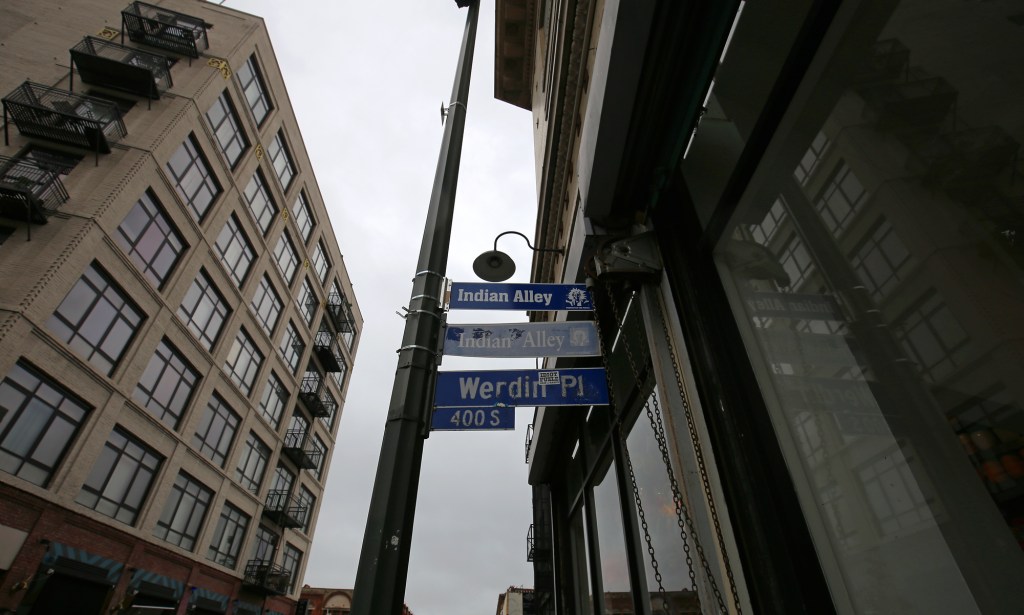
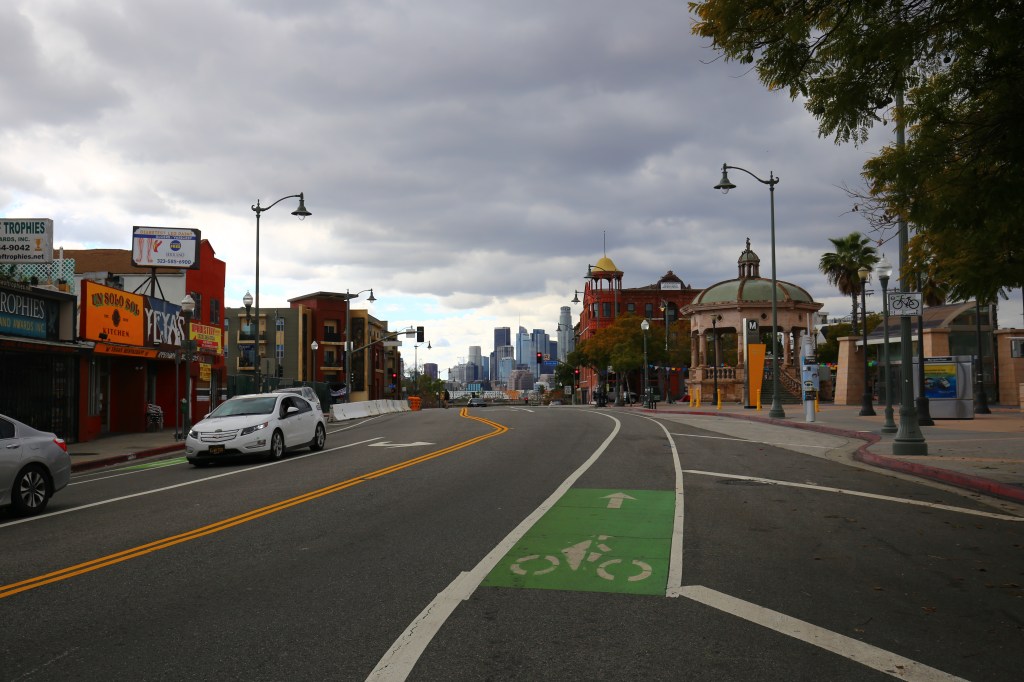
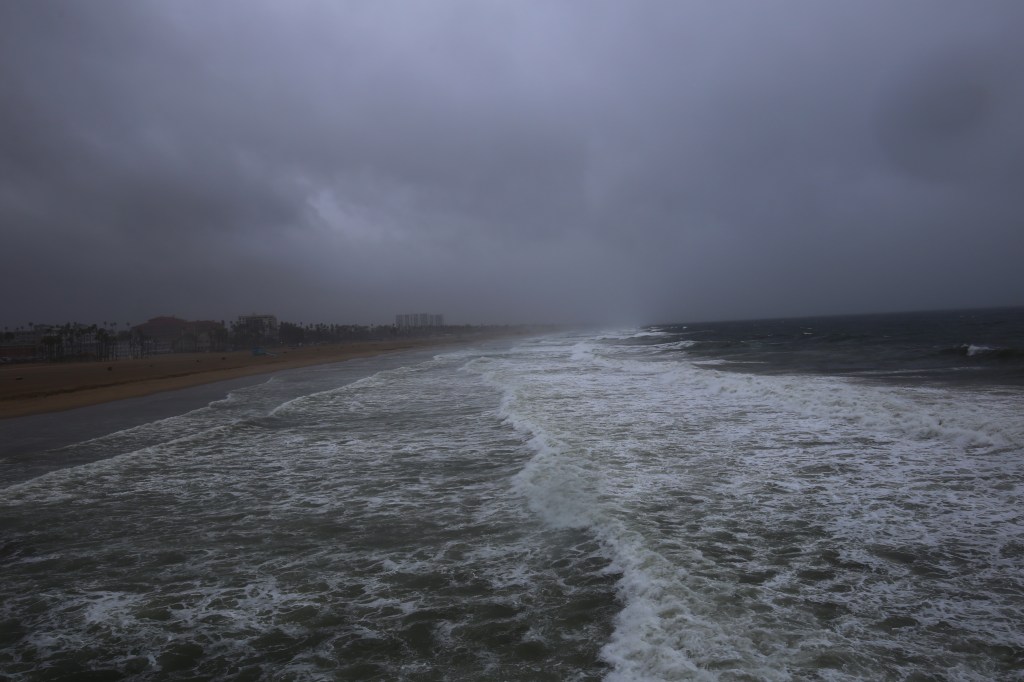
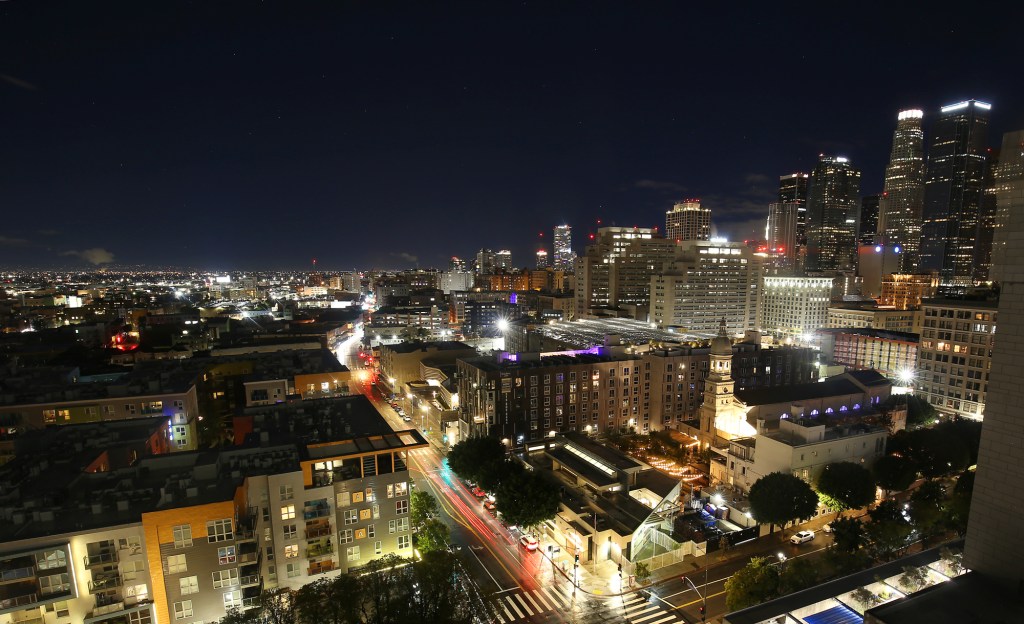
ANDI: From Culver City, the beach is a short drive west so we decided to take a trip to the Santa Monica Pier. With the atmospheric river still not letting up overhead, we bared down against the wind and freezing rain and walked down the pier, past frozen amusement park rides and closed fun and games shops, which, for me, were a blur of color against the dark gray sky and ocean. At some point, my sister and mom fell back and I went on to take at least one photo from the end of the pier. You can see these photos on the website. I know this doesn’t sound like your ordinary Los Angeles vacation, but that was ours and it was memorable. That night, from our downtown hotel, my sister and I took up a couple of those green Lime scooters and rode all over downtown. It was amazing because all the streets were empty. It was cold out and we were full of delicious ramen. We stopped to look at Indian Alley in Skid Row. The old building was the community gathering spot for Native people new to Los Angeles and the headquarters of the United American Indian Involvement center in the 60s and 70s. To learn more about the Native community that developed in those early days, I turned to Los Angeles local, Pamela Peters, Diné multimedia documentarian. Much of her work focuses on the wave of young Native people who came to Los Angeles by way of the Native American Relocation Program. Reminder, the Relocation Program was a government sanctioned program that drew Native people away from their reservations to urban areas to further assimilate them.
PAMELA: I started my work just to really bring to light about the experience
of Native Americans in the city in Los Angeles and so that’s how I started with my first project, “Legacy of Exile NDNZ”, to give really a history of our migration story to the city. I felt that Native American stories are not really shared about us in Los Angeles and we are part of the fabric of Los Angeles and a lot of people don’t know that. I’ve been watching a lot of these migration stories of other cultures. You know, a lot of people know about the Japanese migration and during World War II and then they talk about the migration of African Americans coming out here during the late 1920s and then in the 70s you had the migrations of a lot of the Pacific Islanders and Filipinos coming to LA and you also had a lot of Iranians back in the 70s. And so all these stories are told, and you see their communities and their cultures like stamped in Los Angeles, like you have Koreatown, you have Little Tokyo, a lot of people know South Central as like where a lot of African Americans are. One thing I felt that was missing in the fabric was our stories and so I wanted to shed light of our migration story through the Indian relocation program. Sadly, for me, as a Navajo coming to the city, I didn’t know a lot about the Indigenous, you know, communities here in Los Angeles because they don’t have a nation like we do. They do exist and I’m fortunate enough that I do know who they are and I’ve actually worked for some of the communities, the tribal communities here in Southern California. But in Los Angeles we have the Tongva people and this is what they call Tovaangar, which is Los Angeles, but then there’s other tribal communities as well. We have the Tataviam, we have the Chumash, we have the Echima, we have the Cahuilla. There’s all these different tribes out here, but a lot of people don’t know about them. They only know about the casinos, but there’s this rich culture beyond the casinos that I want people to understand and we live on Native land and it’s always been Native land and I know and I understand as a Navajo that I’m still a visitor here because my home is the Navajo Nation. So just remember that, you know, wherever you go there’s Native land, but just be respectful and understand.
ANDI: In her photo and film project she uses real history and updates scenes from the 1961 film “The Exiles” to tell about how Native people made a home and a community for themselves. Pamela is giving me a walking tour in the downtown area and I figured gathering audio while in the car might be better than risking
my recording equipment in the wet weather, so sorry for some of the audio coming up. The way great projects often start, Pam started her project when ideas and thoughts just got suddenly too loud to ignore.
PAMELA: So this is the U.S. Bank building, so I work there and that’s where I had my “aha” moment. Yeah. And I was like sitting down one day having my lunch looking down at Bunker Hill and I’m like, I need to do this project. I do. Yeah. I need to do it somehow. And so it was just all because I was here. I was sitting looking down at Bunker Hill where I saw the movie was created and I saw all the landmarks of all these different things of LA. And so that’s pretty much why I started my project with the legacy that’s so intense. Yeah.
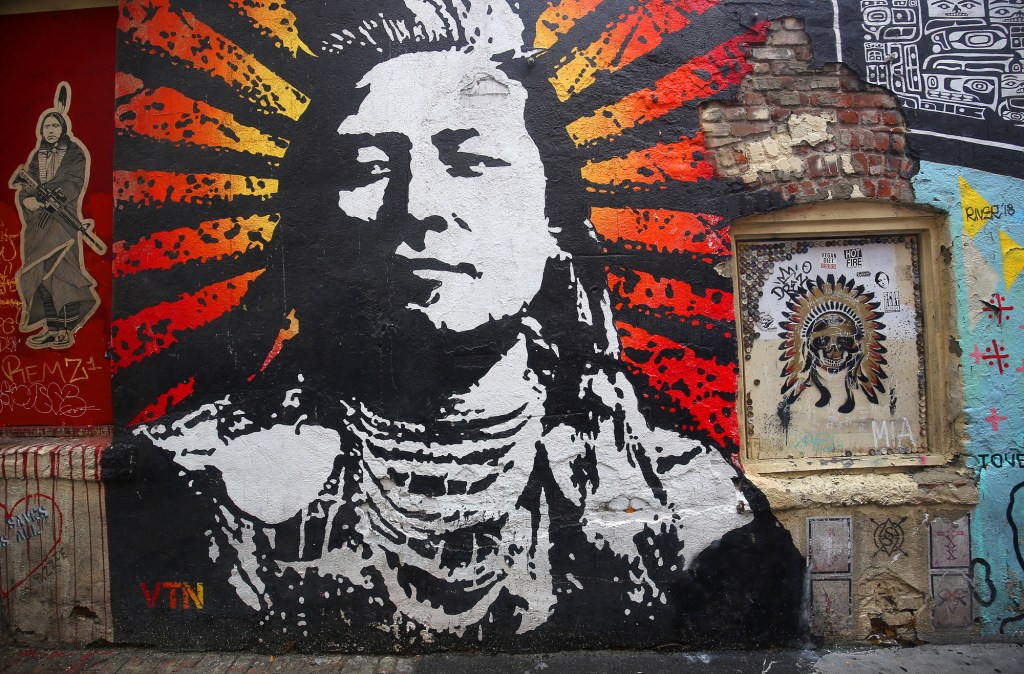
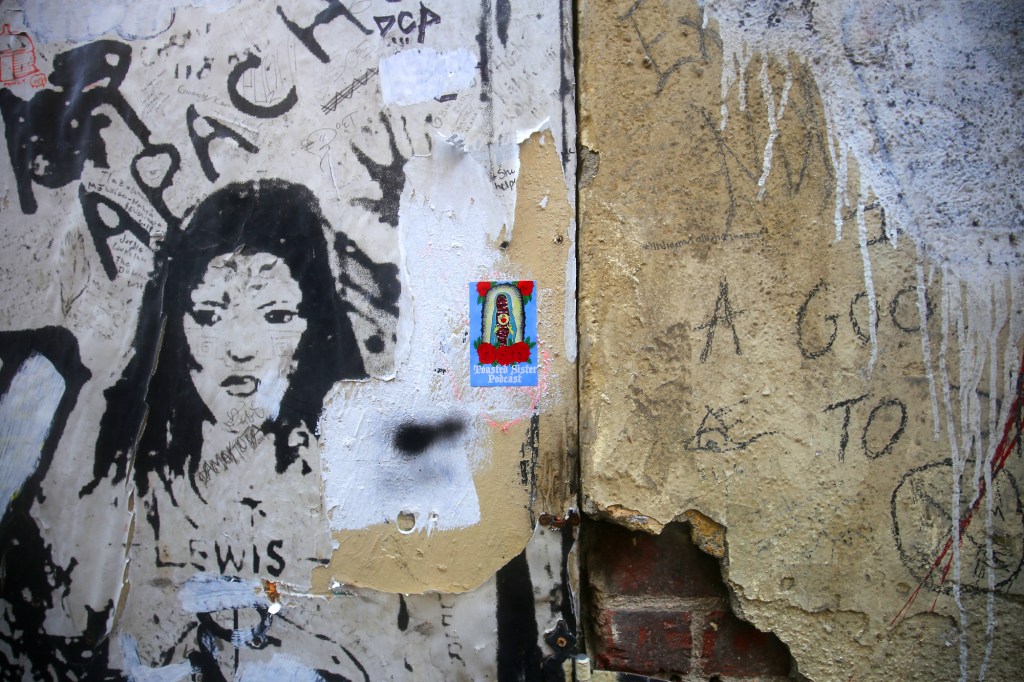
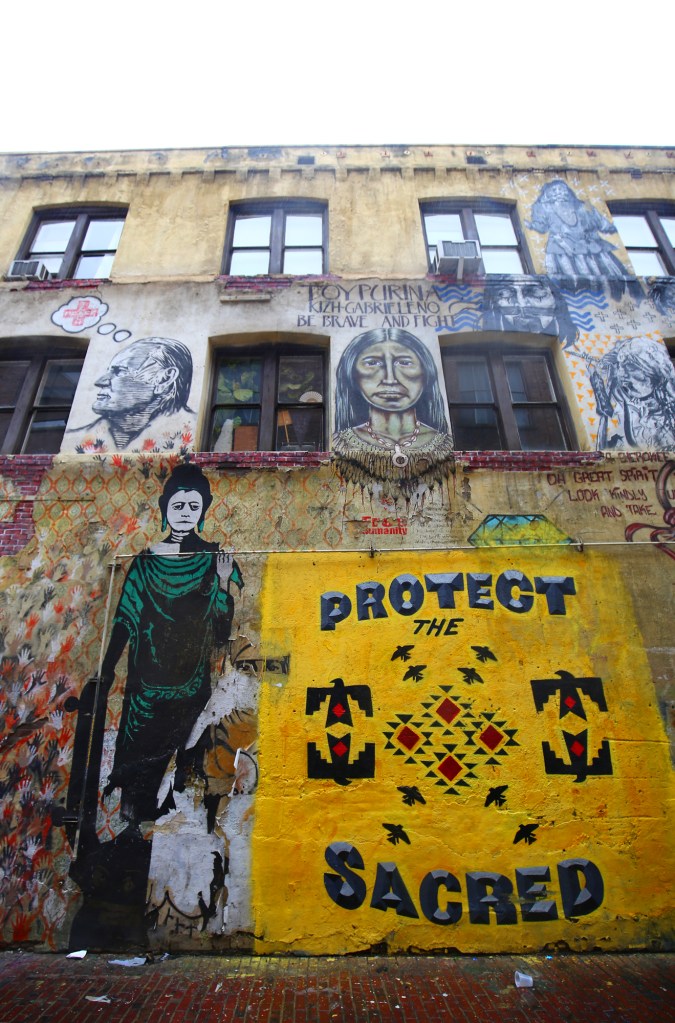
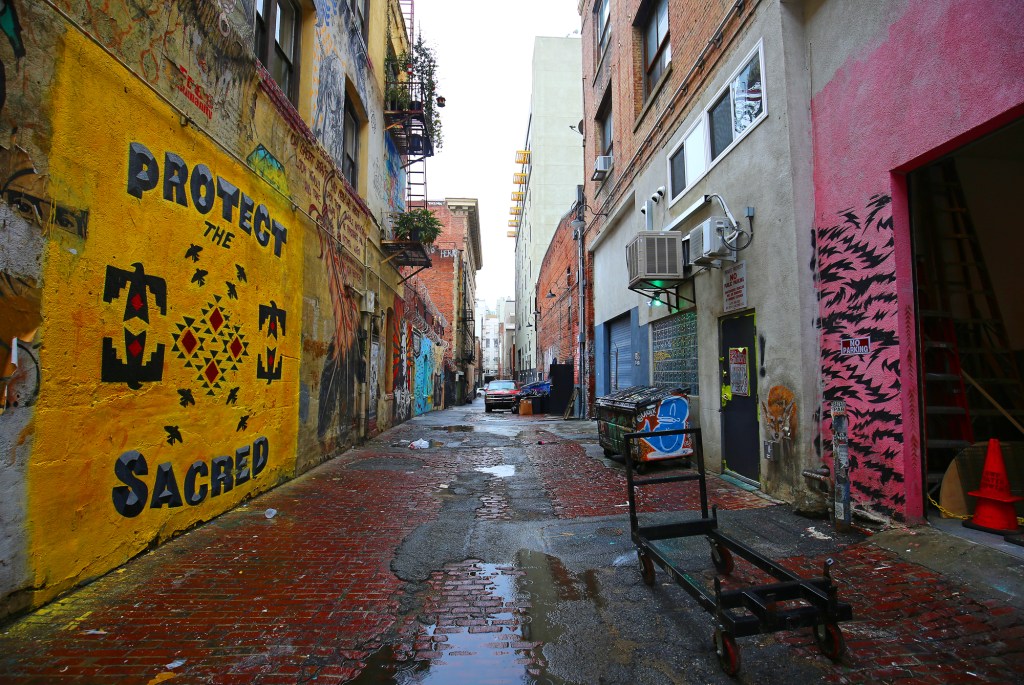
ANDI: We eventually make our way to Skid Row to Indian Alley. We’re huddled together under an umbrella in the alley, which is now a well-known Native art wall.
PAMELA: And this United American Indian Involvement initially started as a rehabilitation center for people that were interested in sobering up. It started by these Native women. Baba Cooper was one of them that’s well known through the research that I’ve done. And she was a recovering alcoholic. She saw the troubles that a lot of Natives were having out here in the 70s. And so a lot of the Natives lived up in Bunker Hill. Once that program started depleting its funding, they had other programs like the JPL program. But, you know, for vocational training here in downtown, and you’ll see a lot of them down further down Skid Row. But a lot of these Natives, when their funding was depleted, they ended up living on the streets. And when you are in down on your luck, there’s a gazillion liquor stores around here, and they can sell liquor for very cheap. Of course, a lot of our relatives went to these and kind of numb themselves. And they lived in this area of Skid Row. And Baba didn’t like seeing that, and she wanted to help her relatives.
And there was a young gentleman. I believe he’s from the Lakota Nation, Robert Sundance. He was a chronic alcoholic. And he is a product of the relocation program from the 1956. He saw himself continuously getting drunk and being thrown into jail, being abused by LAPD. So a lot of, not just the Natives, but also, they kind of like target them and just withdraw them in the, what do they call them? The drunk tank? The drunk tank, yeah. Let them sober up, abuse them, and then throw them back on the street. So he had been, I guess, charged with public intoxication like over a hundred times. And he said, listen, I have a disease.
This is a problem. I need help. They didn’t have any programs at that time. They didn’t have AA. You could go to a rehabilitation center, not unless you had money, not unless you were wealthy. But they didn’t have it for young adults living out here. And so he sued the Los Angeles Police Department. He became friends with a reporter from the LA Times who helped him. He told him, you need to help me. Aside from just abusing me, I need help. And he says, that’s what the police are supposed to do. They’re supposed to help people. And I need help. And so when he had his case, he won. And from that stemmed all these, like, real rehabilitation centers in downtown LA. Another contribution that Natives did that not many people know. And there’s a lot of contributions that has evolved in the, just through my research of what Natives have contributed to LA. But, yeah, there’s a lot. So his contribution really helped a lot of people. And I’ve been sober for going on six years. I’m really surprised sometimes when I talk to some of these counselors from AA, and they’re like, oh, do you know Robert Sundance? I’m like, yeah, I do. They’re like, you know, because of him, we have these. And I’m like, that’s so cool that you know that. So it’s nice to hear that some of his history and what he’s done to help not only Native people, but people in LA with their, you know, addiction. And that’s what Baba Cooper did with UAII. She wanted to help Natives, and she got a grant, and she opened up, they found this place. And it has a long history, this building that we’re looking at right now. It used to be a brothel, used to be a hotel. So this building has been around since the 1800s, and it still stands here among a lot of these old buildings here in downtown LA. And a lot of these buildings down here, they’re still, you know, they’re converted into apartment buildings, but as you can see on the outside, they still say hotel. So there’s hotel, hotel, hotel. That tells you that all of Main Street and Los Angeles Street was hotel, and it was hotels for day laborers. So this is UAII’s first location. Today, it’s well known for all its different art murals that different artists in LA
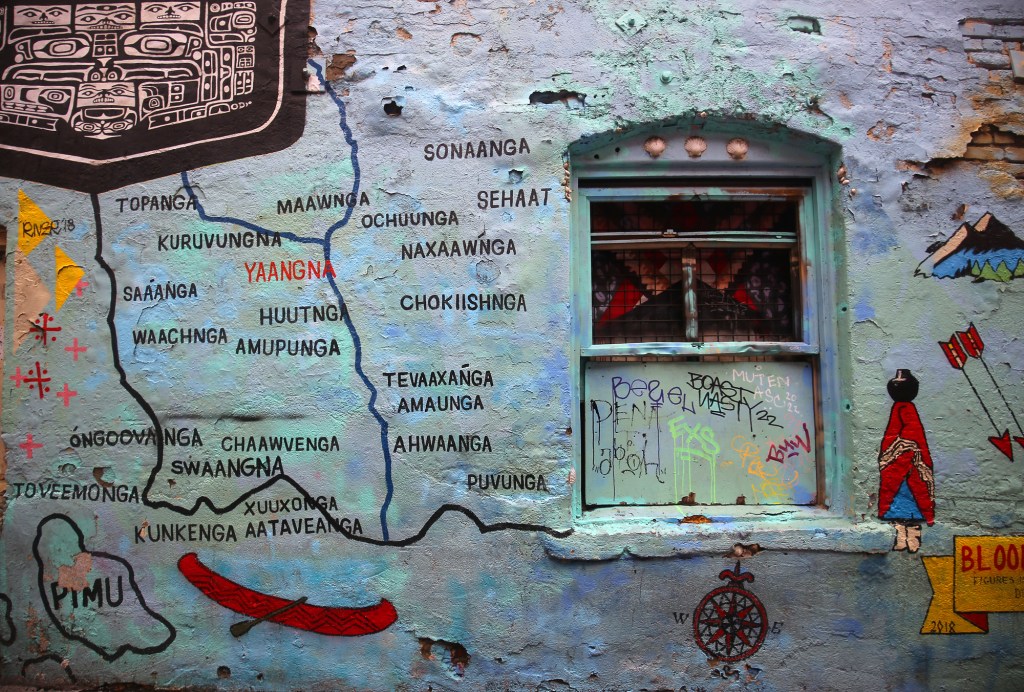
have created. I really wanted to bring some essence of Native American art and understanding of who we are as Native people living in the city. So I sort of recruited like six, seven Native artists to create murals down here. So we are on Tongva Land, and this is actually a village known as Yanga. To pay tribute to the Tongva people, this particular artist created a mural of a portrait of Toyapurina, who was a warrior that fought against colonization and actually did extremely well. You can see her portrait up there. And then next to her is who I talked about, Robert Sundance. (ANDI: Cool.) Yeah, there’s art from all kinds of people here celebrating resiliencies, celebrating fighting back. (ANDI: I see there’s Pacific Northwest art right there. There’s canoes. Yeah.) So we passed Robert Sundance and then Toypurina, and then this was done by an artist many people may know, Cece. She’s Diné and Apache, and she did this whole mural about Native women. You see the images of four Native women there. And then below it is Cherokee Prayer. And then people come down here, they’re welcome to write their tribes, and there’s actually right above the store. There’s a list of all the tribes, and it’s called Tribal Roll Call. And so the artists actually really encourage people if they want to write their tribes. Would you see some people have Kiowa checked out?
(ANDI: They already put Navajo.) Yeah, they put Navajo and Apache and Shoshone.
(ANDI: I’m going to put one of my stickers right there.)
ANDI: Once again, you can see photos from this trip, including the mural wall, at Toasted Sister Podcast.com. It took a lot of perseverance to make it in a growing place like 1960s LA; far away from home. But, when community is built and strengthened, it makes way for vibrancy.
PAMELA: So downtown is like where it started for a lot of Natives to live. They came through Union Station, and then they used to have the Greyhound bus stop. Right here in downtown as well. So those were two portals of Indian location and through a lot of the vocational programs that they had in the 70s and the 80s. Yeah, it’s just amazing how vibrant the city is, and it still continues to be with all the Natives that live here in the city. And it draws people from other reservations still today to come out here. I mean, I think seeing all these young adults living and thriving and now in the entertainment industry is pretty amazing. We have, you know, the powwows out here. I know some people don’t like the term pan-Indianism, but there is. There’s so much that the tribes have exchanged with one another out here. And you see that in the powwows. You see those, you see that in the programs. And we still maintain our cultural identity. And I mentioned to you earlier about Begay who helped put together the Navajo gathering. They have also a Lakota gathering and some, you know, the Pueblo gathering where, you know, tribes find their relatives and they come together and they do things. And they can’t go home and have ceremony. They, you know, have it out here, which I think is really nice because, see, there’s still resilience in a city like Los Angeles.
ANDI: On our way to lunch, we reflect on the legacy of the relocation program and we’re back in Pamela’s car. Yeah, I want to go back a little bit and, you know, I was walking along some of these streets with you here in downtown Los Angeles. And, you know, for me, just personally, I’m feeling out of my element because I’m very much a desert girl. I’m very much a New Mexico Albuquerque girl as well. You know, whenever I leave the city, you know, Albuquerque, I kind of feel out of place. I feel like I want to go home and after a vacation, after a trip, I’m just so glad that I’m going back home. And we were talking about how there were a lot of, back in the relocation era, we had young kids. We’re both older than them. We’re both older than 20-some things. But this relocation era was focused around young people, young Native people who, you know, in your 20s, you’ve got a hunger for this freedom And independence. And once you get here, it kind of, overwhelming. I can view it as like a totally different kind of cultural shock as opposed to like when I was being dropped off at college. When I was being dropped off at college, I knew that I was going to be taken care of. I knew that my room and board were taken care of. I had a meal plan. I had, you know, at least a little Native group that I could go to and, you know, advisors and resources, all that right there. But being dropped off in, you know, Los Angeles and you’re a young Native person, it is overwhelming. And like we saw in that film, “The Exiles,” you know, folks fell into that, numbing themselves with alcohol and partying and maybe getting just too involved in that and coming to a place where you are, you know, struggling really to live. I mean, you know, talk about that a little bit and then how that came to lead up to UAII and what they’ve been doing to, to be a resource for young Native people at the time.
PAMELA: Well, I think when you’re placed in a new environment, you can become overwhelmed. But then you’re also have that part of your freedom where you are a young adult. I mean, I think everybody goes through that phase of being a young adult and you think you know everything, but you don’t really. And you have this independence that you, you have to grow into. And I think as young adults, we want our independence, but we don’t have all the resources of living as a young adult. And I think with, especially with young Natives that came out of the boarding school system where they didn’t have an education like they do today. Their education was more vocational training in order for them to, you know, blend in into Western society’s way of living and working class. Yeah. And so when they came out here, I think they were, you know, they were promised a lot. “Oh, you’re going to have a better life.” If you look at some of the fliers, through the BIA, It gives this the whole fantasy illusion that this is a better life for you, for your family. And there’s, there’s jobs, there’s opportunities. I was looking at some of them and I was just like, wow, and I’ve seen some of the videos of families coming out here and then realizing they didn’t have a house. They lived in, you know, hotel rooms with like, in some cases, like 10 to 12 people in a little hotel room. And you can’t survive that way. So when you’re cramped up like that, you, and you can’t get a job because you’re competing with other ethnic groups and they don’t tell you that.
They don’t tell you that, oh, when you go to the city, you’re also going to be competing for these, you know, blue collar jobs with other ethnicities that are migrating to the city as well. So there becomes a competition and then if you don’t find a job, you get frustrated, you, you want to deal and erase all these negative aspects happening in your life. And so you think the only thing you can do is like numb yourself from reality. And I think a lot of these young adults did that. An I did for a while too. But it’s, it’s scary, you know, alcoholism is a scary disease. And I really commend the women who really like turned their life around and sobered up and really saw, you know, what sobriety can bring to you. And I think a lot of people don’t know that despite the fact that we have this stereotype of us being alcoholics, we also have a lot of programs that help us with sobriety. Like in LA through UAII, they have a sobriety or they call it wellness program where you celebrate with other, other Natives who are going through, are going through their sobriety and we celebrate our sobriety out here. I wish people would, you know, see that we as Native people, we do celebrate our sobriety and we see that as something positive. And that’s something that we can do here in the city. We can do it back home. But I’m not sure if that answers your question.
ANDI: No, it does. And then, back in Indian Alley, we were talking about Mr. Sundance who actually contributed to a lot of LA’s opening of different rehabilitation centers. Can you just rehash that real quick? Who, who was Mr. Sundance? You mentioned him back in the alley there.
PAMELA: So Robert Sundance was a Lakota Native that lived out here. I think he came out here through the Indian relocation program from 1956 and he, like many, um, fell to the addiction of alcoholism. And back in the sixties and seventies, they didn’t have a lot of, um, really understanding of what alcoholism was, was about. They didn’t understand that it was a disease. He was constantly being charged for public intoxication. And I think in the records, it says that he was thrown in jail, like over a hundred times. And what the Los Angeles PD would do is they would just round up all these, um, drug individuals abuse them. And then throw them back on the street. Um, after a day or two of them. Um, sobering up. So he got tired of being beat up basically from the LAPD. And he said, listen, you’re the police officer. You’re supposed to help people. You’re abusing us. You’re abusing all of us. And we have a disease. And they didn’t pay him any attention. And then he was friends with a reporter at the LA Times, got himself an attorney and they sued the LAPD department. And he won. And from that, he helped bring to light these rehabilitation programs in Los Angeles. Contribution that a lot of people don’t know that Natives contribute to LA. And that’s why I say that we still continue to celebrate what he’s done. And UAII has a program called the Robert Sundance program where they help people that want to live that sober life. And we meet, you know, annually and celebrate our sobriety. And I’m very fortunate enough that I’ve, you know, I’m six years sober. And I fell into that whole philosophy of what you’re saying. You’re young in your twenties and you’re out partying. I did. I mean, to be honest, when I was in my early twenties, that’s what drew me out here. I was really excited about, you know, the rock and roll life. And I came out here during the eighties because I was so fascinated with all the bands I used to see on Sunset Boulevard. Motley Crew and Guns and Roses. And, you know, I just wanted to go party that rock and roll life with them. And I did. And I was fortunate enough that I did. I had a great time in my twenties, but it’s destructive too. And I see that today. I know I didn’t live a healthy lifestyle in my twenties. But I turned that all around.
ANDI: That’s pretty interesting too that, you mentioned this rock and roll lifestyle.
I mean, a lot of music movements and, you know, really awesome bands have been formed here, not to mention like all of the entertainment and the, celebrities who come by here and make a name for themselves, contributors just to American pop culture and culture. And, it’s interesting to know that some of our grandmothers and mothers, they were here during that time. And they were part, they were probably like visiting some of the same spots as some of our favorite rock and rollers. And I can imagine that something to also kind of celebrate, but also like learn from us. It was just the draw of this cultural hotspot here too that keeps people here. I’m glad my mom came back to New Mexico and I’m glad we were all born in New Mexico. But, you know, there’s a small part of our family that’s from here. And I think I get it now. Why they want to stay here. You know, personally for me, I would never, but I understand it, I think.
PAMELA: Well, the city seduces you, period. I was so fascinated with that rock and roll party all the time concept. And I did it. I don’t regret it. I loved it. I was young. I did it in my twenties, got to meet a lot of, you know, bands, got to see them in small, like venues. You know, these venues that no longer exist, you know, The Roxy, the Rainbow, Gazzarri’s. Those were all like spots that you could just see all these local bands and upcoming bands. And I just was seduced by it. As a young kid, you’re seduced by rock and roll and partying and just drinking and having a good time. But then you grow out of it. You hit reality and you’re like, “crap, I got to grow up. I got to do something with my life. I can’t live this way.” So that’s what happens.
ANDI: Did you also get seduced by King Taco here?
PAMELA: I did get seduced by King Taco, which we’re rolling up to right now. So my friend- I got, I guess, misidentified with my culture when I first got here. And I was okay with it because I, you know, I was married to a Mexican. I had a lot of Mexican friends. My friend Aurora Gonzalez, she introduced me to King Taco. I would just get tacos, like, down the street where I lived. And I was, I was happy with that. And she’s like, “girl, you don’t know tacos unless you go to King Taco.” I’m going to take you there. So she drove me up to Eagle Rock. We went to the King Taco right off of Cypress And man, it was the best tacos I had ever had in my life. And I had a burrito and I was just like, wow, this is like real food. That’s pretty cool.
ANDI: Now we’re trying to find some parking here. It looks like a very popular spot. It looks like we’re in the right spot though. I already saw a line inside. Those were some special tacos at King Taco. Tacos from taquerias like that are always so, so good. I mentioned that I have families still here in Los Angeles. We made a stop the next day to visit with Tammy Lewis-Willmond at El Tapiak, which is her and her family’s favorite restaurant in town. It’s known for its large burritos called the manual special.
TAMMY: And that’s what brought us here. But all their food is good.
ANDI; And so you are my, let’s see, how should we, you’re my mom’s half sister,… Yeah, half my mom’s half sister’s daughter. And you’ve been living here in Los Angeles all your life, right?
TAMMY: All my life, yes, born and raised.
ANDI: All right. And you were telling me over lunch just a while ago about the neighborhoods here in East Los Angeles. Why is there such a concentration of Native folks in these neighborhoods you mentioned?
TAMMY: Oh, the neighborhoods I mentioned are probably a little bit further out from East Los Angeles, but I mentioned neighborhoods like Bell Gardens, Southgate, Cartaget, Norwalk. If you’re from the LA area, you’re familiar with those areas, but those areas were more the designated areas for Native Americans who were brought over through the relocation program in the 1950s. And so many of them, from what I understand, many of the men who served or had some type of military training, they were the ones that probably picked up faster to make their way over here. And they brought their families. Some came before and then went back and brought their families, but eventually they made it out here. And a lot of the companies that were doing the hiring were like, what did I say, Boeing, Donald Douglas, that’s where the men would go and get their jobs. So many of them came and they’ve settled into those areas of like Bell Gardens, Southgate, Cartaget, Norwalk, that surrounding area, because that’s where they were first brought when they were relocated, and many of them stayed there.
ANDI: And your dad’s side of the family, part of the relocation program too?
TAMMY: Yes, my father is Chickasaw and Mississippi Choctaw from Oklahoma, and their family came over probably in 1959, 1958, somewhere around there, and yes, they were part of the relocation program and brought out here also.
ANDI: And what kind of gathering places or like social places popped up along with the families moving into these areas, these neighborhoods?
TAMMY: Well, I was really, really small. I was a baby, but growing up, we became familiar with a lot of events that took place in certain places, like Ford Park. Ford Park was probably a big place that it just seemed like so many events took place there. Ford Park was where people gathered, not just with family, but to me, with their friends. I kind of remember like they even had certain times when they had their powwows there. They had other events that took place there, like men’s softball. I know my father played in that. My mother played in softball, the women’s softball league. They had a marathon, and those continued on for years, even after we stopped going. But it’s always been a common area where many Natives go to meet and gather. There’s also churches in the area where they were Native churches, so a lot of people who went to church, if you were looking for family or someone, you would go there too.
ANDI: All right. Do you guys have interest or are you guys cooking Native foods at home? Is that something that came maybe you learned from your parents or from other Native folks in the area?
TAMMY: Not really Native foods or Native meals. I was talking about that with my father the other day, and it’s something that my children also have brought up before. There really isn’t maybe an understanding of having Native foods or what meals are because we’re so, I guess you can say, city Indians. We’re not really set or focused on Native foods. Although a lot of my family, they are cooks, both my sons, are working well-known restaurants out here, so does my brother. And being in Los Angeles, it’s just a melting pot of all these different people and cultures that come in, and we’re more likely to go back and have comfort foods of fried potatoes and tortillas with Spam. Believe it or not. And sometimes, like from my father said, they will go back to having biscuits and pashofa are something similar that they are used to. Even though we live in the city, those are still the comfort foods that we go to.
ANDI: Tacos and foods in Mexican eateries here have their origins in Indigenous people of Mexico and Mesoamerica and their diaspora. Like Dr. Ochoa said, the contributions of Native Americans to the culinary history of Los Angeles is going to take more studying. There are small efforts to give Native food exposure in Los Angeles, but not so much to call it a movement… But it’s safe to say that those comfort foods Tammy mentioned are being cooked in the homes of second, third and fourth generation LA-born Natives. It’s a tie to home and culture.
Our trip here with my mom—though fun and delicious—had a sadness that we helped my mom carry. It was just a few years ago that her sister, Shirley, our Aunty Shirley, died. She lived most of her life in Los Angeles was buried back at home in New Mexico.
The Urban Relocation program was supposed to assimilate Native Americans and get them off reservations so that there would be no reservations and no more tribes. It was part of what we call the Termination Era in the United States.
My mom never talked about her upbringing in Los Angeles as part of a government program. My sister and I only made the connection when we learned about it in American Indian Studies in college. It gave us a whole new understanding of her and our grandparents.
Everything I learned on this adventure also gave me better understanding of that point in time where my mom was sitting on the sidewalk with her sister and eating tacos on Olvera Street. I hope you also learned a lot from my adventure, too.
If you’d like to see who appeared on this episode, names and links are in the show notes and on the website.
This is the Toasted Sister Podcast. I’m Andi Murphy.
Thank you to my mom for your courage and thank you to Alisha for your support. The Outro Music and intro music for Toasted Sister Podcast is by CW Ayon.
Other music in this episode is by Blue Dot Sessions. You heard Cornacob-Sugar Tree, Sienna’s Regression-Haring Bone, Sharp Lapel-Transistor Radio, the Queen of Cones-Tarana, and Caravan 9-the Caravan. This is The Toasted Sister Podcast and I’m Andy Murphy.
MUSIC
MOM: When we used to go to the Ralphs grocery store, we were always barefooted. We’d go into the store with our bare feet. Everywhere, I don’t remember wearing shoes. (ANDI: And just by yourself, right? Like your parents used to just say, like, “go over there, go get something and bring it back?”) Yeah, I mean, and we used to go to the park with no shoes on. So yeah, I remember those days. You’re always talking about the liquor store, too. Yeah, there was a liquor store around the block where we lived and we used to go through the alley as it was a shortcut. And we still ask our “mom, mom, can we go to the liquor store?” And I didn’t know what it meant. I just knew they were, they sold candy and stuff in there. So she would say, “yeah, go ahead, go to the liquor store.”
 Toasted Sister
Leave a comment